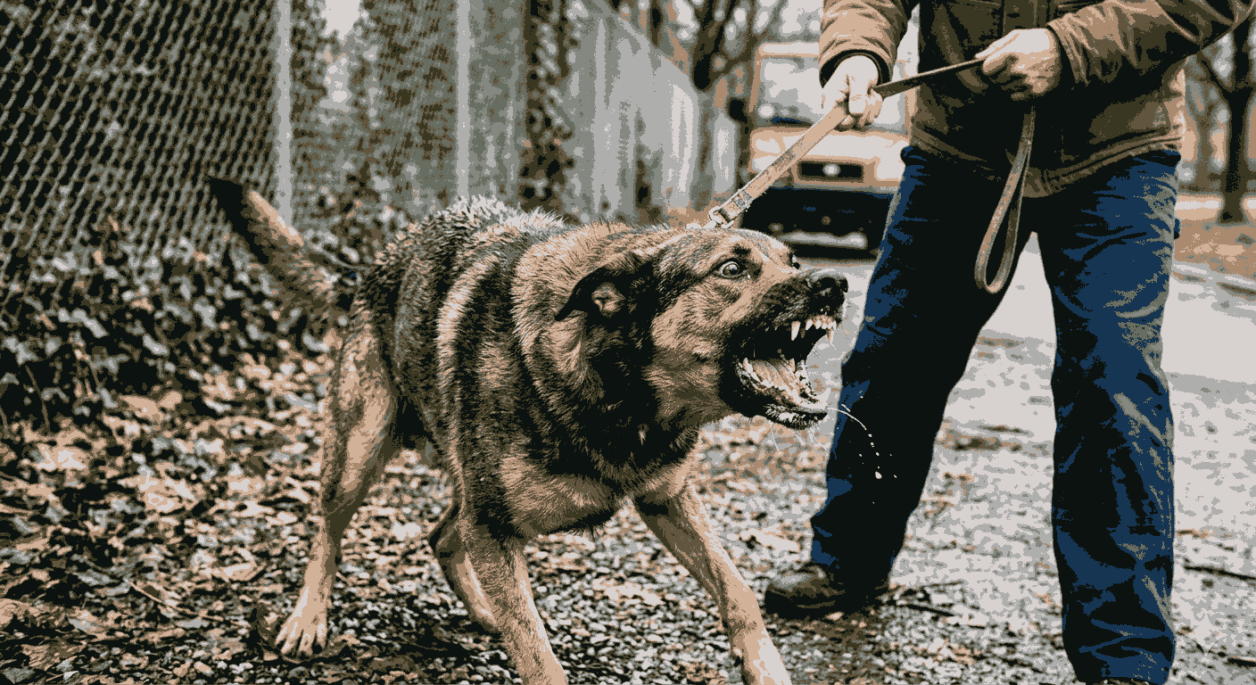
Rabies is often described as a “100% fatal, yet 100% preventable” disease. However, a recent tragic case of a 21-year-old woman in India—who passed away from rabies despite completing her vaccination course—has sparked a necessary conversation about why the vaccine alone sometimes fails.
According to Dr. Priyam Bordoloi, these tragedies often occur due to a “window of vulnerability” or “cold chain failures” (where vaccines lose potency because they aren’t stored at the correct temperature).
If you or a loved one are ever bitten by a dog, following these four critical steps could mean the difference between life and death.
 1. The 15-Minute Flush
 1. The 15-Minute Flush
The moment a bite occurs, the clock starts ticking. Dr. Bordoloi emphasizes that you must wash the wound immediately with soap and running water for at least 15 minutes. This isn’t just basic first aid; it is the most effective way to mechanically remove and kill the virus at the point of entry before it can travel to the nervous system.
2. Demand the RIG (Rabies Immunoglobulin)
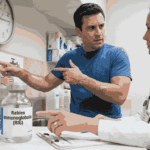 2. Demand the RIG (Rabies Immunoglobulin)
Many people believe that getting a shot in the arm is enough. However, for “Category III” exposure (where the skin is broken or there is bleeding), a vaccine is not enough on its own.
You must ask for Rabies Immunoglobulin (RIG). Unlike the vaccine, which takes 7 to 14 days to help your body produce antibodies, RIG provides instant antibodies directly at the site of the wound. It acts as a shield while your body waits for the vaccine to kick in.
3. Choose the Right Hospital
 3. Choose the Right Hospital
Not all medical facilities are equal when it comes to rabies care. Vaccines are delicate and must be stored constantly between 2°C and 8°C.
Dr. Bordoloi suggests avoiding small clinics that may suffer from frequent power cuts or lack specialized medical refrigeration. Instead, head to a major government hospital or a reputable medical center where strict “cold chain” protocols and backup generators are guaranteed.
4. Zero Delay: Location Matters
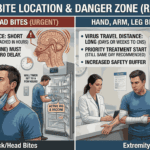 4. Zero Delay: Location Matters
The closer a bite is to your brain, the faster the danger. If you are bitten on the face, neck, or head, the virus has a much shorter distance to travel to the central nervous system. In these cases, treatment cannot wait a day—it must begin within hours.
The Reality of Rabies in India
 e Reality of Rabies in India
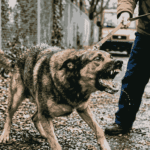
India currently carries the highest rabies burden in the world, accounting for roughly 36% of global deaths. With an animal-bite case reported nearly every two seconds, awareness is our best defense.
The Bottom Line: Rabies symptoms—such as hydrophobia (fear of water), confusion, and paralysis—only appear once the virus has reached the brain. At that point, it is almost always too late. By knowing these four steps, you can ensure that a preventable bite doesn’t turn into a tragedy.
Disclaimer: This post is for informational purposes only and does not substitute for professional medical advice. Always seek immediate care from a healthcare professional following an animal bite.