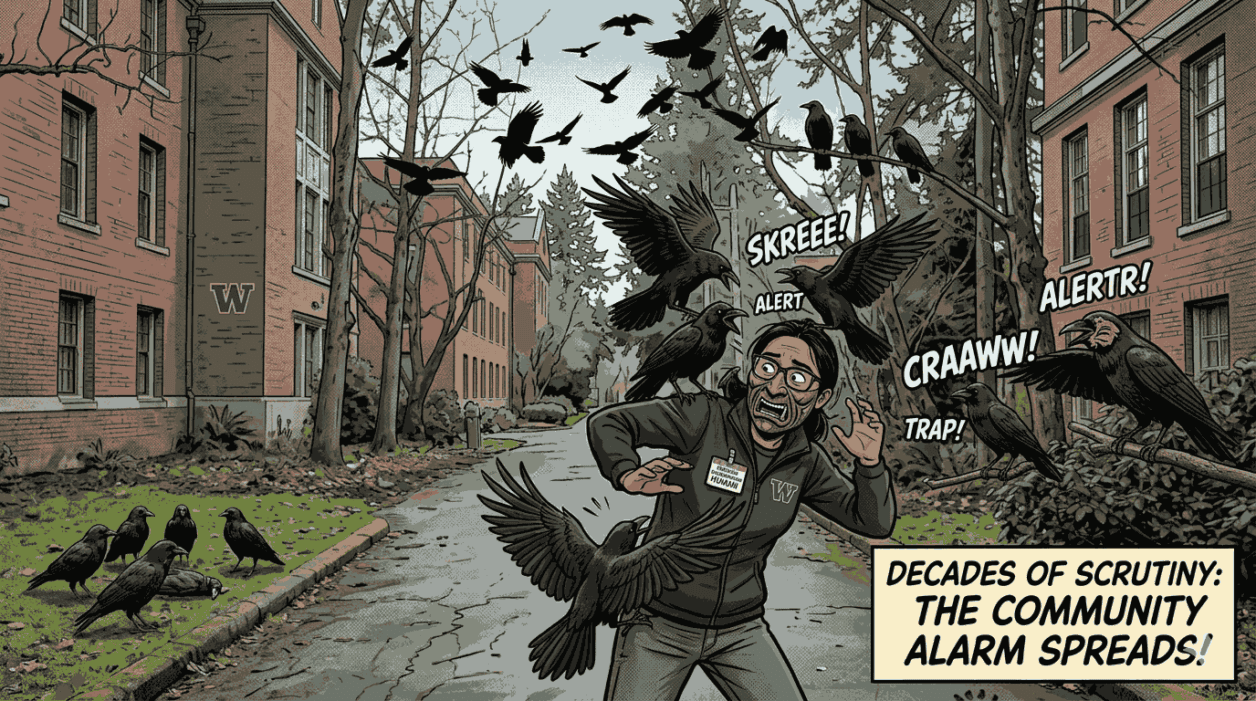
It is absolutely true. Crows are widely considered some of the most intelligent animals on the planet, and their ability to recognize and remember human “enemies” is well-documented by science.
 1. They Recognize Individual Faces
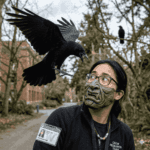 1.
1. A famous long-term study at the University of Washington used rubber masks to test this. Researchers wore a “dangerous” mask while trapping and banding crows, and a “neutral” mask while simply walking by. Years later, the crows—and even their offspring—would still “scold” and dive-bomb anyone wearing the dangerous mask, while completely ignoring the neutral one.
2. They Share Information
 2. They Share Information
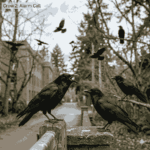
Crows don’t just remember for themselves; they communicate. If one crow identifies a threat, it will let out a specific alarm call. Other crows in the area (who may have never even met the “enemy”) will join in the harassment. This is why a “grudge” can spread through an entire neighborhood of birds
3. Their Memory Lasts Decades
 3. Their Memory Lasts Decades
Recent data from the same University of Washington study showed that crows maintained their hostility toward the “dangerous” mask for up to 17 years. This is particularly impressive given that the average lifespan of a wild crow is often much shorter; it suggests the “threat” is passed down culturally through generations.
4. They “Investigate” Death
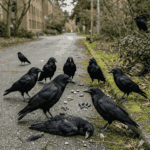 4.
4. When a crow finds a dead companion, they often hold what looks like a “funeral.” Scientists believe this is actually a danger-assessment meeting. They gather to figure out what killed their peer so they can recognize that specific predator or person as a threat in the future.
The University of Washington “Mask” Experiment
The foundation of our understanding of crow memory comes from a landmark study at the University of Washington. Researchers wanted to know if crows could recognize individual human faces.
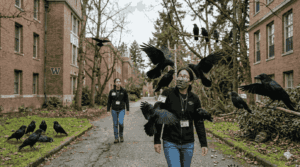
The experiment was simple (and slightly creepy):
The “Dangerous” Mask: Researchers wore a caveman mask (the “enemy”) while capturing, banding, and releasing wild crows. This was a brief, scary event for the birds.
The “Neutral” Mask: Other researchers wore a mask of Dick Cheney (chosen arbitrarily as neutral) and simply walked through the area without bothering the birds.
The result? The crows hated the caveman.
For years afterward, whenever anyone walked by wearing the caveman mask, the crows would immediately go into “mobbing” mode—cawing furiously, dive-bombing the wearer, and alerting every other bird in the area.
Meanwhile, “Dick Cheney” could walk by completely unbothered. The crows knew exactly who their enemy was.
A Grudge That Lasts Decades (and Spreads Like Wildfire)

This is where it gets truly wild. The University of Washington study didn’t just last a few weeks. They continued to test the crows’ reactions to the masks for over 17 years.
What they found was astonishing:
Long-Term Memory: Crows that were initially captured remembered the “dangerous” mask for nearly two decades. This rivals or exceeds the memory capabilities of most mammals.
The Power of Social Learning: Years after the initial experiment, new crows—birds that had never even been captured—began to mob the caveman mask. The original crows had taught their children, mates, and neighbors that this specific face meant danger.
The “grudge” had gone viral in the crow community, creating a cultural memory of an enemy that most of the birds had never actually met.
How Do They Know Who to Trust?
This isn’t just about anger. Crow intelligence is about survival. Their advanced social structure allows them to build a collective database of threats and resources.
“Funeral” Investigations: When crows discover a dead companion, they gather around it in silence. Scientists believe this isn’t about mourning, but intelligence gathering. They are surveying the area to figure out what killed their peer so they can classify that predator or environment as a “threat.”
Remembering Kindness: The flip side is also true. Crows perfectly remember people who feed them or help them. If you make friends with a crow, it might even bring you “gifts”—shiny objects like buttons, beads, or keys—as a token of its regard.
The Takeaway: Be a Crow’s Friend, Not Its Foe
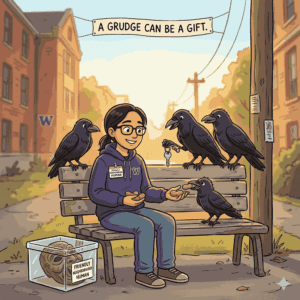
The lesson here is clear. Crows are not simple, reactive creatures. They possess a social intelligence that is, frankly, intimidating. They are watching, learning, and sharing information.
If you respect them, they will respect you (and perhaps leave you a lucky penny). But if you cross one? You aren’t just angering an individual bird; you are making an enemy of the whole neighborhood.
And they never forget.
| Feature | Behavior |
| Facial Recognition | High; can distinguish between similar human faces. |
| Memory Duration | At least 17 years (potentially a lifetime). |
| Social Learning | Can teach their young and peers to hate a specific person. |
| Tactics | “Mobbing” (group scolding and dive-bombing). |