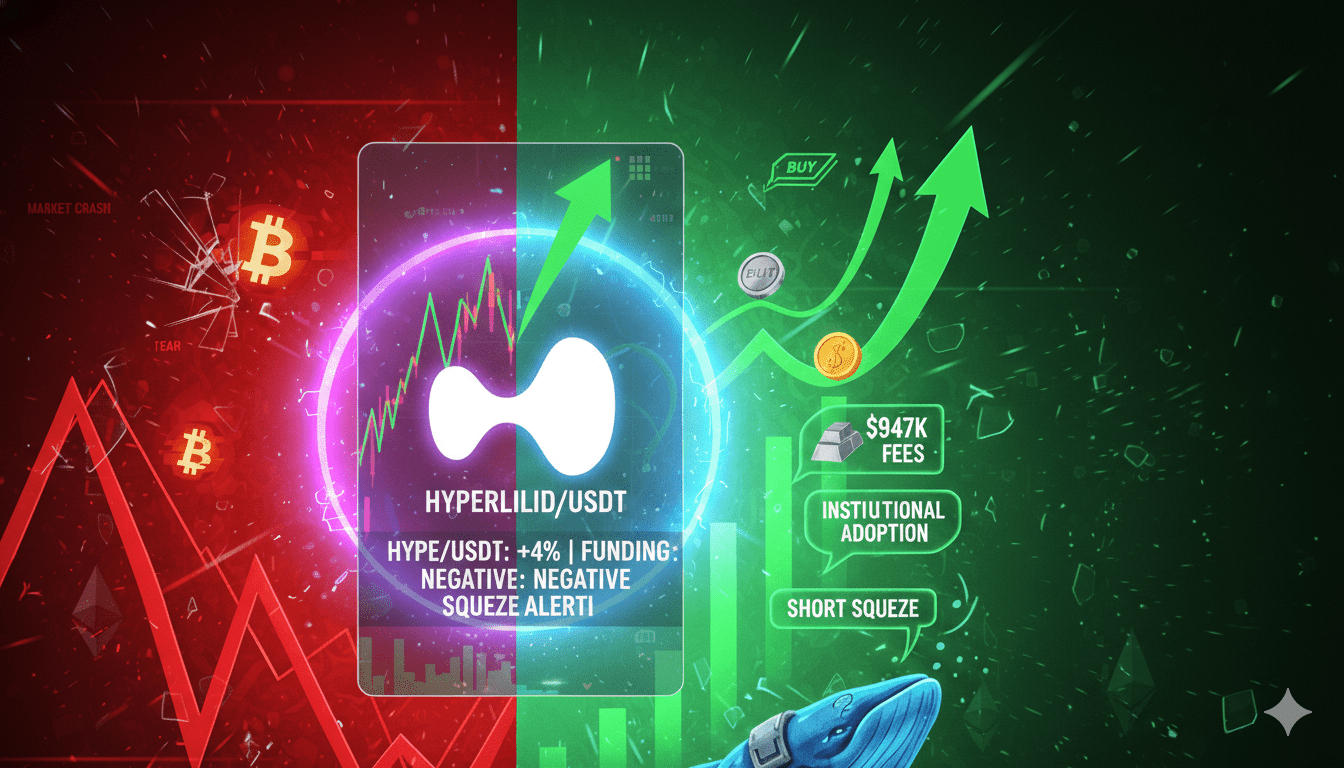
It’s a classic crypto paradox: you wake up to a sea of red, but one or two random coins are up 20% like they didn’t get the memo.
While it feels like magic (or a glitch), there are actually a few “under-the-hood” reasons why specific crypto hypes can defy a crashing market.
1. The “Flight to Quality” (Bitcoin Dominance)
When the broader market panics, investors often dump risky “altcoins” and move their money into Bitcoin or Stablecoins.
How it works: This is called a “risk-off” move. Even if Bitcoin’s price is slightly down, its dominance (its share of the total market cap) often goes up because everything else is falling faster.
The “Hype” Angle: If a specific sector (like AI tokens or Real World Assets) is perceived as the “next big thing,” investors might treat it as a temporary safe haven, causing it to pump while the rest of the market bleeds.
2. Sector Rotation
Crypto isn’t just one big blob; it’s divided into “sectors” (Gaming, DeFi, Memecoins, Infrastructure).
The “Why”: Large traders and whales often move capital out of exhausted sectors and into a new one to “chase alpha” (extra profit).
The Result: You might see the “Old Guard” (like Litecoin or XRP) dropping while a new narrative—say, a specific Layer-2 solution—is pumping because that’s where the “hot money” just landed.
3. Short Squeezes
This is a technical “gotcha.” When a coin is expected to crash, many traders “short” it (betting the price will go down).
The Trigger: If a small piece of good news hits or a whale buys a large amount, the price ticks up.
The Chain Reaction: Those short-sellers are forced to buy back the coin to close their positions and stop their losses. This “forced buying” creates a massive upward spike, making the coin look like it’s thriving even though the rest of the market is in the gutter.
4. Market Manipulation (Low Liquidity)
In a “red” market, trading volume usually dries up. When volume is low, it takes much less money to move a price.
The Strategy: Coordination groups or “whales” can target a specific low-cap coin. Because everyone else is focused on the crash, they can pump that specific coin to create a “green candle” that attracts retail FOMO (Fear Of Missing Out), using it as a trap to dump their holdings on others.
A Word of Caution: These “counter-trend” pumps are often the most dangerous. They frequently end in a “bull trap,” where the price crashes twice as hard once the initial hype or manipulation runs out of steam.
Hyperliquid’s native token, HYPE, is a textbook example of how a project can “decouple” from a crashing market. While most tokens bleed when Bitcoin drops, HYPE has recently shown an ability to stay green or recover faster.
Here is the “how and why” behind Hyperliquid’s performance during market-wide red days:
1. The “Yield during Volatility” Loop
Hyperliquid is a decentralized exchange (DEX) focused on perpetual futures (leveraged trading).
The Logic: When the market gets volatile (red), trading activity actually increases because people are panic-selling, shorting, or getting liquidated.
The HYPE Connection: A portion of the fees generated from all that trading volume is used to buy back HYPE or distributed to stakers. In a red market, the exchange makes more money, which creates direct buying pressure for the token.
2. Narrative-Specific Hype (Silver & Commodities)
Recently, Hyperliquid expanded beyond just crypto. In late January/early February 2026, the platform saw a massive surge in Silver futures trading.
By allowing users to trade traditional commodities like Silver on-chain, Hyperliquid attracted a different class of “macro” traders.
Since users must lock or use HYPE-related products to create and maintain these markets, the token pumped because of commodity demand, which is often completely unrelated to whether Bitcoin is up or down.
3. Institutional “DeFi” Adoption
While the retail market might be panicking, institutions have been moving toward Hyperliquid as a “clean” DeFi play.
ETP Launches: In February 2026, firms like CoinShares launched physical HYPE staking ETPs (Exchange Traded Products).
When a regulated financial product launches during a market dip, it creates a “floor” of institutional buying that prevents the price from falling as hard as “meme” or purely speculative coins.
4. Ecosystem “Lock-in”
Hyperliquid isn’t just a token; it’s its own Layer-1 blockchain (HyperEVM).
New apps (like the “Based” superapp which recently raised $11.5M) are being built on top of Hyperliquid.
Investors often hold HYPE to participate in these new ecosystem “airdrops” or launches. This “diamond hand” behavior reduces the amount of HYPE available for sale during a market crash.
Summary Table: Why HYPE Defies the Red
Note: Even though it’s performing well, watch out for “Whale” liquidations. Recent data shows some large traders have massive leveraged long positions that could cause a flash crash if the market stays red for too long.
As of late February 2026, Hyperliquid (HYPE) is in a high-tension zone. While it “pumps” during red days because of high fee generation, the data right now shows a potential short squeeze brewing, but it’s balanced against some heavy “whale” risks.
Here is the breakdown of the live numbers:
1. Live Price & Technicals
Current Price: Approximately $27.22 (ranging between $25.75 and $28.18 today).
24h Trend: It’s actually up about 4% while the broader market is shaky.
The “Crossroads”: HYPE is currently testing a crucial resistance level at $30. If it breaks above this, analysts are projecting a move toward $38 by the end of the month. If it fails, it might drop to support at $23.90.
2. Funding Rates & Squeeze Potential
This is where the “Hype” you mentioned gets interesting:
The Signal: Recent data shows negative funding rates and a Long-to-Short ratio of 0.76.
What this means: More traders are betting against HYPE (shorting it) than betting on it.
The “Squeeze” Risk: When funding is negative and the price starts creeping up (like it is now), those short-sellers get “squeezed.” They are forced to buy back their positions to avoid liquidation, which could trigger a massive, sudden vertical pump.
3. The “Whale” Warning
Despite the bullish squeeze potential, there is a major “boss fight” happening in the order books:
Distressed Longs: Reports indicate a massive whale holding a $41M long position is currently battling significant unrealized losses.
The Danger: If the price dips too low, this whale could be liquidated, which would dump millions of tokens onto the market at once, potentially “nuking” the price and canceling any squeeze momentum.
4. Ecosystem Health
Revenue: Hyperliquid just recorded nearly $947,000 in 24-hour fees, actually overtaking Solana’s revenue for that period. This is the “fundamental” reason it stays green when others are red—the exchange is making a killing on the volatility.
Adoption: The platform now sees roughly 31% of its volume coming from TradFi perpetuals (like Silver and Commodities), which helps it stay decoupled from Bitcoin’s price action.
Summary Table: HYPE Status Report
Why Hyperliquid (HYPE) Is Defying the Crypto Bloodbath: A Deep Dive into Its Resilience
In the volatile world of cryptocurrency, seeing a sea of red is a familiar sight. Yet, every now and then, a project emerges that seems to march to the beat of its own drum, pumping while the rest of the market bleeds. Currently, Hyperliquid (HYPE) is that project, and its recent performance has caught the eye of traders and analysts alike.
If you’ve been wondering why HYPE is bucking the trend, let’s break down the “how and why” behind its remarkable resilience.
The Current Landscape: HYPE at a Crossroads
As of late February 2026, HYPE is trading around $27.22, managing a respectable 4% gain in the last 24 hours while much of the market struggles. It’s currently testing a critical resistance level at $30. A decisive break above this could propel it towards $38, but a rejection might see it retest support around $23.90.
This isn’t just random luck; there are several fundamental and technical forces at play.
1. The “Yield During Volatility” Engine: More Chaos, More Revenue
Hyperliquid is a decentralized exchange (DEX) specializing in perpetual futures – essentially, leveraged trading. And here’s the paradox: when the broader crypto market gets chaotic and volatile (i.e., “red”), trading activity on platforms like Hyperliquid often surges.
The Logic: Panic selling, aggressive shorting, and liquidations all drive immense trading volume.
The HYPE Connection: A significant portion of the fees generated from this heightened activity is directly used to buy back HYPE tokens or distributed to stakers. This creates consistent buying pressure for HYPE, even when other assets are being dumped. In fact, Hyperliquid recently generated nearly $947,000 in 24-hour fees, temporarily surpassing Solana’s revenue!
2. Diversification Beyond Crypto: The TradFi Hook
One of Hyperliquid’s smartest moves has been to expand its offerings beyond just crypto assets. The platform has seen a massive surge in trading for traditional commodities like Silver futures in late January/early February 2026.
The Appeal: By allowing users to trade assets like Silver on-chain, Hyperliquid attracts a different class of “macro” traders whose investment thesis is often entirely independent of Bitcoin’s price movements.
HYPE’s Role: Since users need to interact with or lock HYPE-related products to participate in these markets, demand for the token grows, creating a buffer against crypto-specific downturns.
3. Institutional Embrace: A Foundation of Stability
While retail investors might be in panic mode, institutional players are increasingly looking to DeFi protocols like Hyperliquid as a “cleaner” and more efficient trading venue.
ETP Launches: Firms like CoinShares launched physical HYPE staking Exchange Traded Products (ETPs) in February 2026. This is a game-changer. When regulated financial products tied to HYPE launch, they introduce a baseline of institutional buying pressure, helping to stabilize the token’s price even during broader market corrections.
4. A Self-Sustaining Ecosystem & Short Squeeze Potential
Hyperliquid isn’t just a token; it’s built on its own Layer-1 blockchain (HyperEVM). This allows for an expanding ecosystem of dApps (decentralized applications) to build on top, such as the recently funded “Based” superapp. Investors are often incentivized to hold HYPE to participate in future ecosystem “airdrops” or launches, which reduces the selling pressure during market dips.
Adding to this, the current data shows fascinating technicals:
Negative Funding Rates: More traders are betting against HYPE (shorting it) than betting on it, as indicated by a Long-to-Short ratio of 0.76.
The Squeeze: If HYPE continues its upward trajectory, these short-sellers will be forced to buy back their positions to cover their bets, potentially triggering a significant short squeeze and a rapid price pump.
The “Whale” in the Room: A Word of Caution
Despite all these bullish factors, it’s crucial to acknowledge a significant risk: a $41 million whale long position is currently battling unrealized losses. Should the price dip too low, a liquidation of this magnitude could flood the market with millions of HYPE tokens, potentially causing a sharp price drop and negating any short squeeze momentum.
The Bottom Line
Hyperliquid’s ability to thrive in a “red” market is a testament to its strong fundamentals, diverse offerings (including TradFi assets), institutional adoption, and robust ecosystem. While the current market dynamics present exciting short squeeze potential, the presence of large leveraged positions always warrants caution.