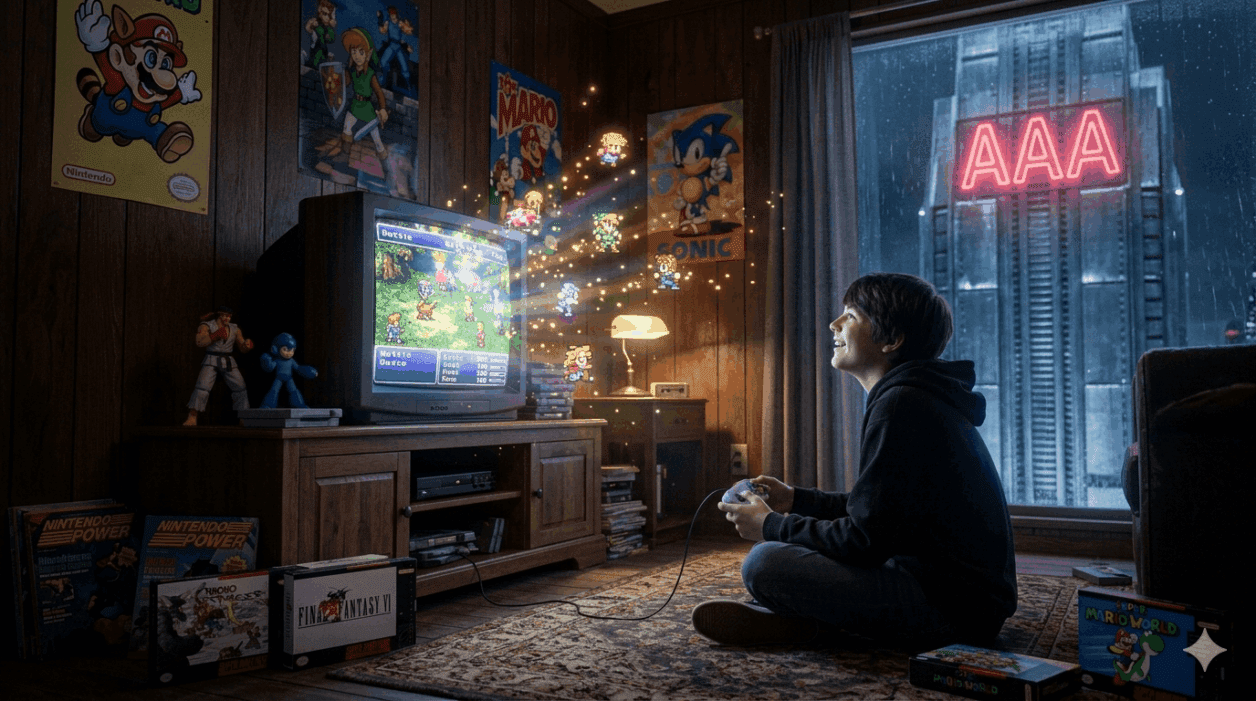
Many people today feel that video games are not as fun as they used to be. Even though modern games have amazing graphics and big budgets, many players are going back to older games from the 1980s and 1990s. This is not just because we miss the past. It is because the way games are made today often makes them feel like work instead of play.
The Move from Passion to Profit
In the past, games were often made by small groups of passionate people who loved what they were doing . Because the teams were small, they could take big risks and try weird, new ideas. Today, the biggest games—called “Triple-A” (AAA) titles—are made by giant corporations . Because these games cost hundreds of millions of dollars to build, companies are afraid to take risks. They prefer to make sequels or copy popular trends because it is a safe way to make money. This leads to many games feeling like “reskinned” versions of things we have already played many times before.
Instant Fun vs. Modern Chores
One of the best things about old games is “instant gratification” . You could put a cartridge into a console and be playing in seconds. Modern games are often “bloated,” which means they are filled with too much extra stuff that isn’t very fun. They have huge open worlds that are full of “empty space” and boring tasks that feel like a “full-time job”. In contrast, older games were “bite-sized” . You could play for five minutes or an hour and feel like you actually achieved something.
The Problem with Too Much Help
Modern games are often criticized for “holding the player’s hand” too much. They use long tutorials and arrows that tell you exactly where to go and what to do. Some games even have side characters who tell you the answer to a puzzle before you have a chance to think about it. Older games didn’t do this, partly because they didn’t have enough computer memory for long instructions. Players had to figure things out for themselves, which made winning feel like a true achievement.
The Trap of Updates and Extra Costs
In the old days, when you bought a game, it was “feature complete”. You paid once and you owned the whole game forever. Today, many games are released before they are finished, and you have to download a “Day-One Patch” just to make them work. Even worse, many modern games are “Live Services”. This means the game is designed to keep you playing forever so it can sell you “microtransactions” or “battle passes”. Some companies even make the game boring on purpose so they can sell you “time savers” to skip the parts that aren’t fun.
Why Limits Made Games Better
It sounds strange, but the weakness of old computers actually helped make better games. Because developers had very little space, they had to focus on making the gameplay perfect. They couldn’t hide a boring game behind fancy graphics. This is why 2D pixel art still looks good today—it uses “abstract” graphics that let the player use their imagination. Modern “photorealism” can sometimes look distracting or “wrong” because it tries too hard to look like real life, which makes small mistakes stand out.
The Rise of the Indie Alternative
Because major corporations are playing it so safe, the “magic” of old-school gaming has mostly moved to the “indie” scene . Small indie teams are the ones taking the creative risks today, making games that focus on fun ideas rather than corporate checklists . While modern Triple-A games are amazing technical achievements, they often lose the “soul” and freedom that made the classics so special.