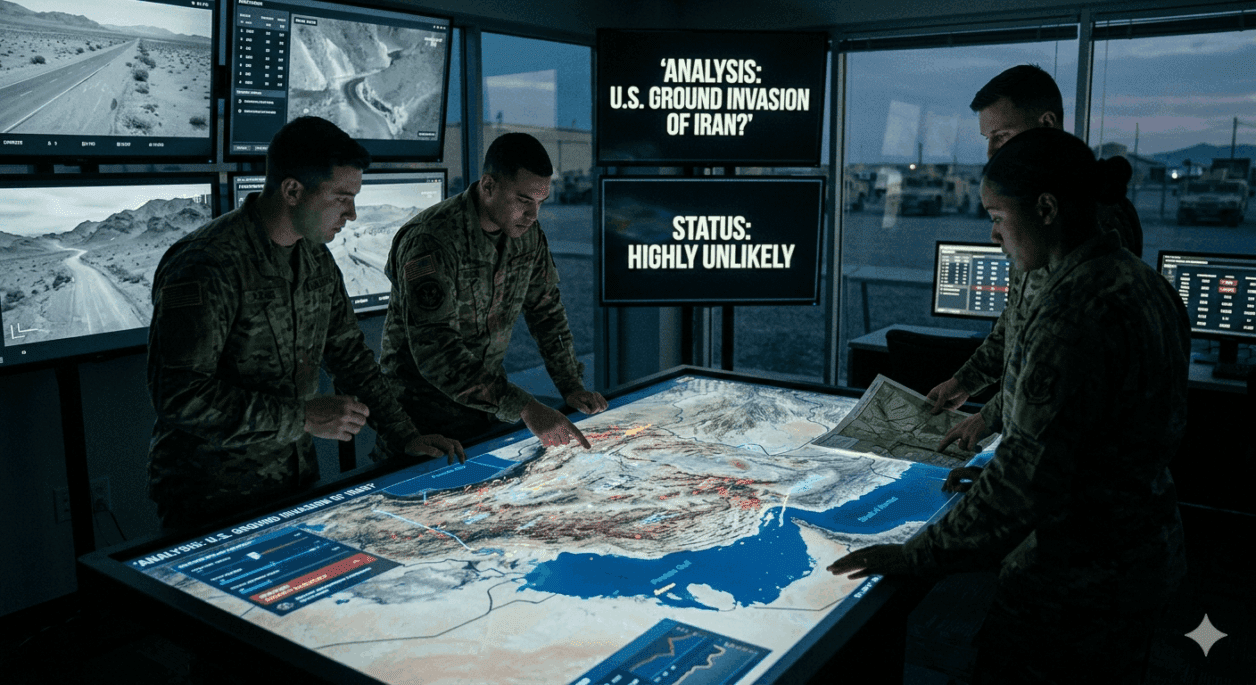
The question keeps resurfacing every time tensions spike in the Middle East: Is the United States actually preparing for a ground invasion of Iran? Short answer: Highly unlikely in the current scenario. Long answer: far more complex—and worth understanding.
The United States and Iran have been strategic adversaries since the 1979 revolution. Relations have been defined by decades of sanctions, proxy conflicts, cyber warfare, and periodic military escalations. However, direct large-scale war—especially a ground invasion—is a completely different level of conflict.
One of the biggest factors making a ground invasion unlikely is military cost and scale. A potential ground invasion of Iran would face significant challenges and obstacles that differ from other recent conflicts. The size and geography of the country, coupled with a large, experienced military force, would require a massive and prolonged operation, exceeding the scale and complexity of the wars in Iraq and Afghanistan.
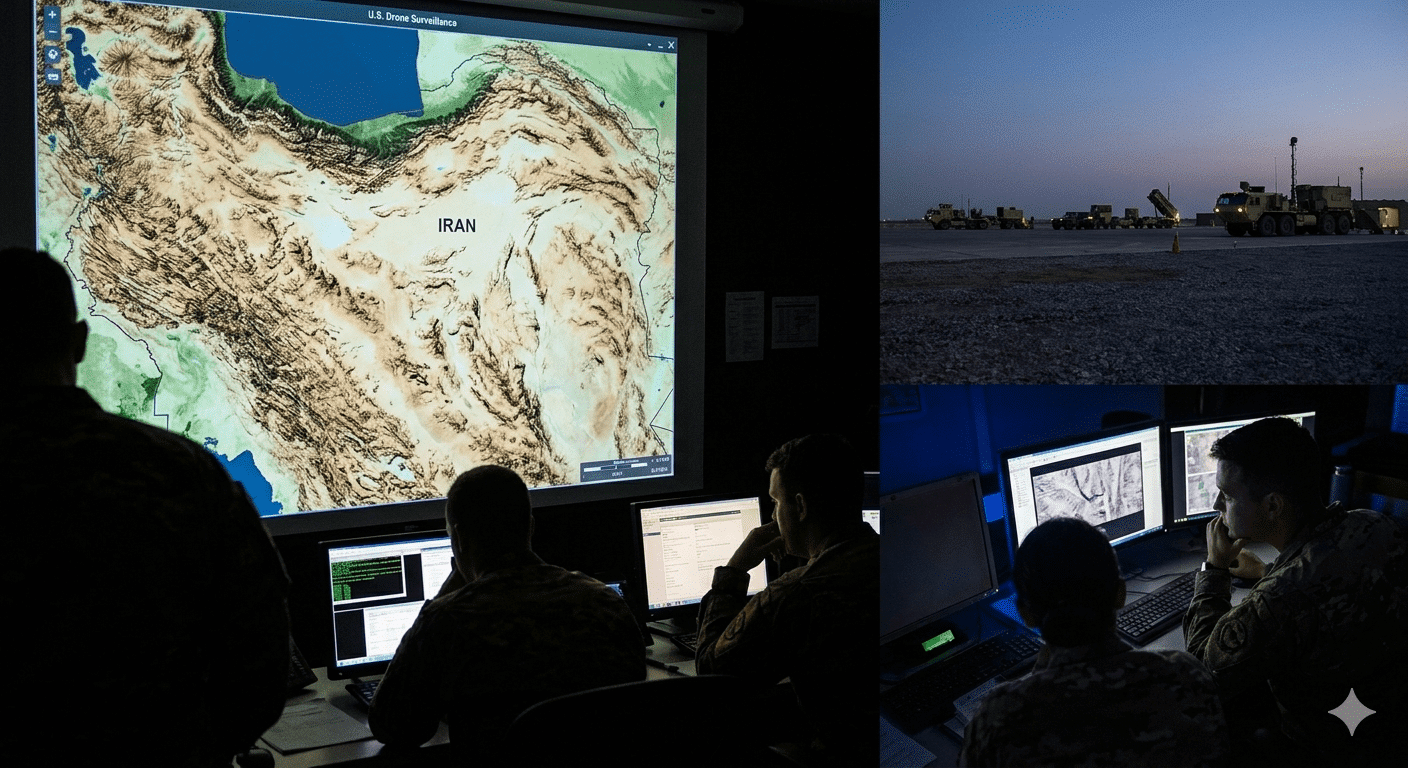
A ground invasion would not be a contained conflict. Concerns about regional fallout are paramount. Iran has a significant network of regional allies. An invasion would risk destabilizing the entire Middle East, with conflicts flaring up in Lebanon, Iraq, Syria, and Yemen, and potential attacks on U.S. bases.
Another major deterrent is the economic consequences. Iran’s geographical location near the critical Strait of Hormuz oil transit route means any war would disrupt global oil supplies, causing oil price spikes and global economic instability, impacting economies worldwide.
Finally, political constraints in Washington are substantial. In the wake of long-term engagements in Iraq and Afghanistan, there is little appetite among the American public or political leaders for another massive ground war in the Middle East.
Given these significant obstacles and potential costs, what is the current U.S. strategy? It is a policy of containment, not conquest. Key elements include deterrence by maintaining a strong military presence nearby, utilizing air and naval power for potential targeted strikes, imposing severe sanctions to apply economic pressure, and engaging in cyber operations as part of a “silent war” for strategic advantage.
Could this strategy change? A ground invasion might only become a serious consideration under extreme, and unlikely, circumstances, such as a large-scale direct attack on the U.S. homeland or a massive escalation involving key allies like Israel, triggering a global conflict scenario. But even then, initial responses would likely involve airstrikes, not immediate troop deployments.
The bottom line is clear: despite rising tensions, there is no credible evidence the U.S. is planning to put boots on the ground in Iran. Instead, a shadow conflict persists—a complex interplay of covert operations, regional influence battles, and strategic posturing. The most significant danger right now is not a pre-planned invasion, but rather a dangerous miscalculation that could lead to an unintended escalation of hostilities.
Keywords: US Iran war US vs Iran 2026 America Iran conflict Will US invade Iran Iran US tension explained Middle East war news Strait of Hormuz oil crisis US military Iran strategy Israel Iran conflict World War 3 possibility