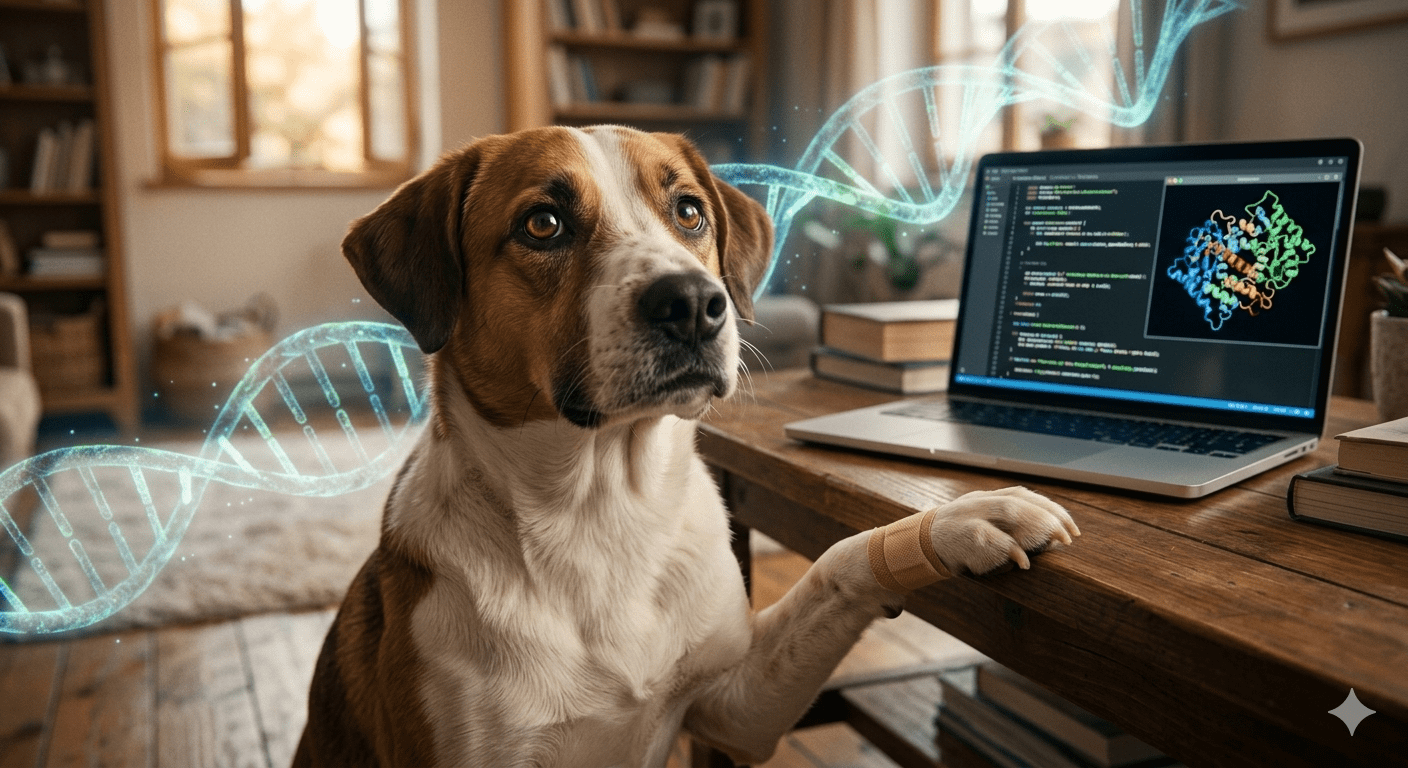
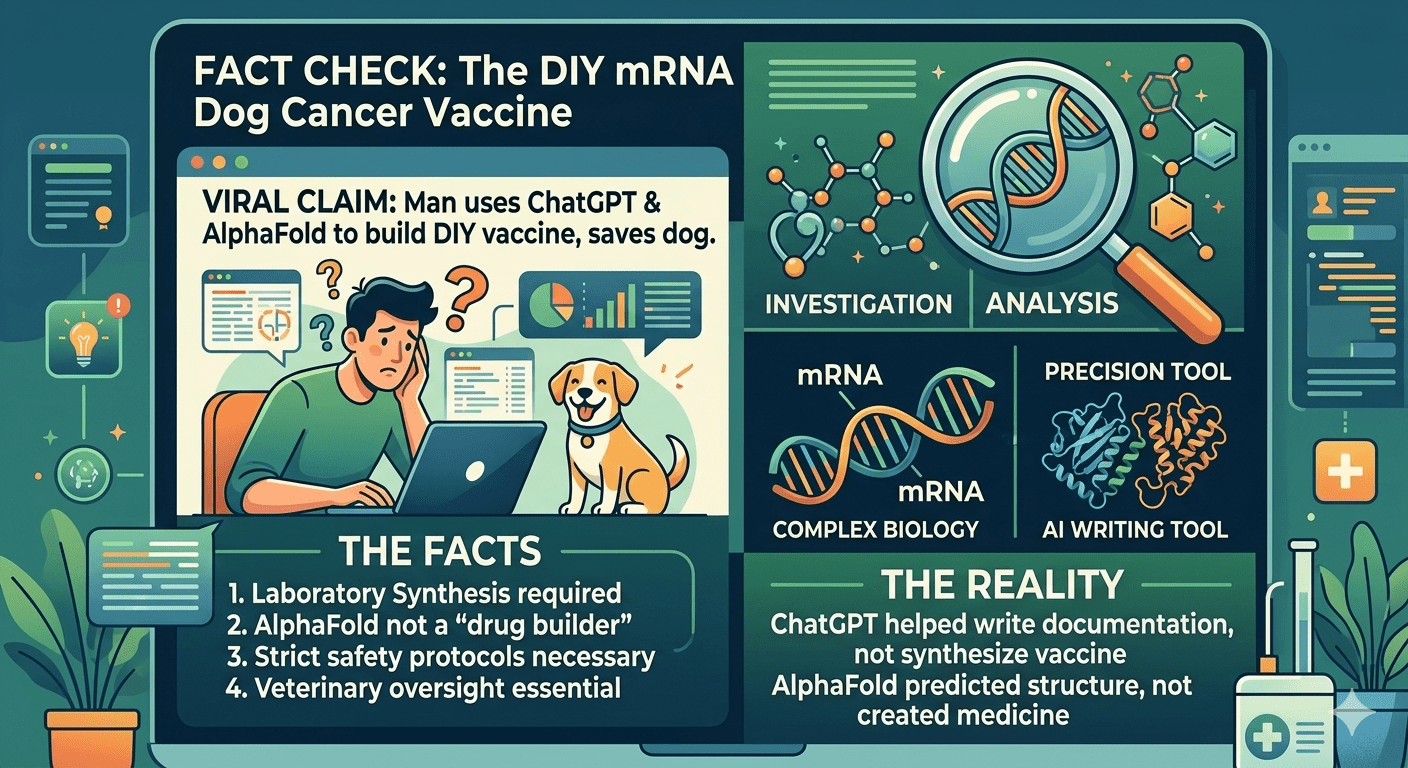
The Claim: A recent wave of headlines claims that an Australian tech entrepreneur used AI tools like ChatGPT and AlphaFold to build a DIY mRNA cancer
Introduction: How One Man Used ChatGPT and AlphaFold to Create a DIY Vaccine for His Dog
When headlines declared that a tech entrepreneur had used ChatGPT and AlphaFold to “cure” his dog’s cancer with a homemade mRNA vaccine, the internet lit up. Was this the dawn of AI‑driven personalized medicine—or a reckless experiment dressed in high‑tech clothing?
The story, which first aired on Australian television and was later picked up by outlets like *India Today*, sounds almost too futuristic to be true. Yet behind the viral headlines lies a nuanced reality: one man’s desperate attempt to save his pet, using cutting‑edge AI tools, a university lab, and months of regulatory wrangling. The result was a custom mRNA vaccine that appears to have significantly shrunk his dog’s tumor, buying precious time. But is this a reproducible breakthrough—or simply a lucky anecdote?
Let’s break down the facts, the technology, and the ethical boundaries of this remarkable case.
—
The Backstory: Rosie’s Diagnosis:
In 2019, Australian data scientist Paul Conyngham adopted Rosie, a Staffordshire Bull Terrier‑Shar Pei cross, from an animal shelter. Five years later, the dog was diagnosed with cancer. Traditional treatments—including chemotherapy—were tried but failed to stop the tumor’s progression.
Facing the prospect of euthanasia, Conyngham decided to take an unconventional route. With 17 years of experience in machine learning and data analytics, he was no stranger to AI. He began exploring whether artificial intelligence could help design a personalized therapy for his pet.
—
How AI Became the “Lab Partner”
1. Genomic Sequencing – Finding the Enemy
Conyngham’s first step was to understand the genetic basis of Rosie’s cancer. He contacted the Ramaciotti Centre for Genomics at the University of New South Wales (UNSW), which performed whole‑genome sequencing for about 3,000 Australian dollars. This process read the dog’s DNA from both healthy cells and tumor cells.
The goal: compare the two genomes to pinpoint the mutations driving the cancer. Conyngham described it as “comparing the original engine of your car with a version after 300,000 km—you can see where the damage is.”
2. ChatGPT – Designing the Roadmap
With raw genomic data in hand, Conyngham turned to OpenAI’s ChatGPT. He used the AI to help formulate a research plan: how to analyze the mutations, which scientific literature to review, and what steps were needed to translate the findings into a potential treatment.
Importantly, ChatGPT did not “discover” anything on its own. Instead, it acted as an accelerated research assistant, helping Conyngham navigate complex oncology and immunology concepts he hadn’t worked with before. He told *The Australian*, “I went to ChatGPT and came up with a plan on how to do this.”
3. AlphaFold – Deciphering Protein Targets
This is where the science becomes even more sophisticated. Google DeepMind’s AlphaFold is an AI system that predicts the 3D structure of proteins from their amino acid sequences. Understanding protein structure is critical for identifying which mutated proteins might be “visible” to the immune system (neoantigens) and thus suitable targets for a vaccine.
Conyngham fed the mutation data into AlphaFold to model the altered proteins. By visualizing how the mutations changed protein shape, he could select the most promising neoantigens—the ones most likely to trigger a strong immune response.
4. Creating the mRNA Vaccine
With the target neoantigens identified, Conyngham collaborated with UNSW researchers to design a synthetic messenger RNA (mRNA) vaccine. mRNA vaccines work by delivering genetic instructions that teach cells to produce a harmless piece of the target protein. The immune system then learns to recognize and attack any cell displaying that protein—in this case, cancer cells.
The custom vaccine was manufactured with the university’s help, but administering it to Rosie required formal ethics approval. Conyngham spent three months, “two hours every night,” writing a 100‑page ethics application to obtain permission for the trial on his own dog.
—
The Results: What Actually Happened?
Rosie received her first injection in December 2025, followed by booster doses. According to Conyngham, the tumor shrank significantly. However, because the cancer was advanced, he remains cautious: “I’m under no illusion that this is a cure, but I do believe this treatment has bought Rosie significantly more time and quality of life.”
He is now developing a second vaccine to target a remaining tumor, adding, “There’s actually a chance that for some cancers, we can change it from being a terminal sentence to a manageable disease.”
—
Fact‑Check: What the Headlines Got Right (and Wrong)
✅ Confirmed Facts:
– Paul Conyngham used ChatGPT and AlphaFold to assist in designing a treatment plan and analyzing mutations.
– Genomic sequencing was performed by a legitimate university research center.
– A custom mRNA vaccine was produced and administered with university collaboration and ethics approval.
– The dog’s tumor measurably shrank, and the animal’s quality of life improved.
⚠️ Missing Context:
It was not a “DIY” project in the garage: Conyngham relied on professional genomic sequencing, university labs, and a formal ethics process. The AI tools were aids, not autonomous agents.
– This is not a proven cure: It is a single, uncontrolled case study. In medical science, such anecdotes generate hypotheses, not conclusions.
– AI did not “create” the vaccine: AI helped identify targets; humans synthesized the mRNA and administered the treatment under ethical oversight.
– Regulatory hurdles remain enormous: This approach, if attempted for a human, would face years of clinical trials and regulatory scrutiny. Conyngham himself noted the difficulty of obtaining ethics approval even for a dog.
The Broader Implications: What This Means for Medicine:
While this story is about a dog, it touches on several frontier topics in medicine and technology.
Personalized Cancer Vaccines
The idea of using genomic data to create bespoke cancer vaccines has been pursued in human oncology for years. Companies like BioNTech and Moderna are already conducting trials of personalized mRNA vaccines for cancers such as melanoma and pancreatic cancer. However, these efforts typically involve large teams, sophisticated manufacturing, and regulatory approval—costing millions.
Conyngham’s story suggests that AI tools might lower some of the analytical barriers, potentially accelerating personalized medicine. But the cost of sequencing, manufacturing, and regulatory compliance remains substantial.
The Role of Large Language Models in Science
Using ChatGPT to design a research plan is both innovative and risky. LLMs can generate plausible‑sounding but inaccurate information. Conyngham’s 17‑year background in data science was likely essential to interpret and validate the AI’s output. For someone without that expertise, the same approach could be dangerous.
AlphaFold’s Expanding Role
AlphaFold has already revolutionized structural biology. This case demonstrates a practical application: using predicted protein structures to select vaccine targets. As AlphaFold becomes more integrated into drug discovery pipelines, we may see more such “garage‑to‑lab” stories—though always with the need for rigorous validation.
Ethical and Regulatory Questions
Treating a pet with an unapproved custom therapy sits in a regulatory gray zone. Conyngham sought ethics approval, but such approvals are designed for research, not routine care. The process took months and required extensive documentation. If similar efforts multiply, regulators may need to clarify pathways for “personalized compassionate use” in veterinary medicine.
—
Expert Voices (Contextual)
While no independent experts were quoted in the original India Today article, the scientific community’s general view on such cases is one of cautious optimism. Immunologists point out that even if a tumor shrinks, long‑term remission is uncertain without controlled studies. Oncologists emphasize that every cancer is unique, and what works for one dog may not work for another.
Nevertheless, many researchers see AI‑assisted personalized vaccines as a promising frontier. The combination of genomic sequencing, AI‑driven target selection, and rapid mRNA manufacturing could eventually transform cancer care—but it will require systematic research, not just heroic individual efforts.

Conclusion: A Hopeful Story, Not a Blueprint:
Paul Conyngham’s use of ChatGPT and AlphaFold to help treat his dog’s cancer is a remarkable story of love, ingenuity, and the power of emerging technologies. It highlights how AI can empower individuals with scientific expertise to tackle complex medical challenges outside traditional institutions.
However, it is essential to separate the inspiring anecdote from the headline‑grabbing hype. This was not a simple “AI cures cancer” moment, nor is it a method that should be replicated without proper expertise, ethical oversight, and realistic expectations.
What it *does* represent is a glimpse into a future where AI tools lower the barriers to personalized medicine—while reminding us that the final steps still require rigorous science, collaboration, and a healthy dose of humility.
For now, Rosie is alive, her tumor has shrunk, and her owner is working on a second vaccine. That alone is a testament to what can happen when human determination meets cutting‑edge technology. But the road from one dog’s story to a new standard of care will be long—and it will need to be paved with data, not just headlines.
—
Sources:
– India Today: “Man uses ChatGPT and AlphaFold to build DIY mRNA cancer vaccine, saves dog” (March 15, 2026)
– The Australian (original reporting, as cited by India Today)
– University of New South Wales Ramaciotti Centre for Genomics
– DeepMind AlphaFold public resources
– Published literature on personalized mRNA cancer vaccines (contextual background)