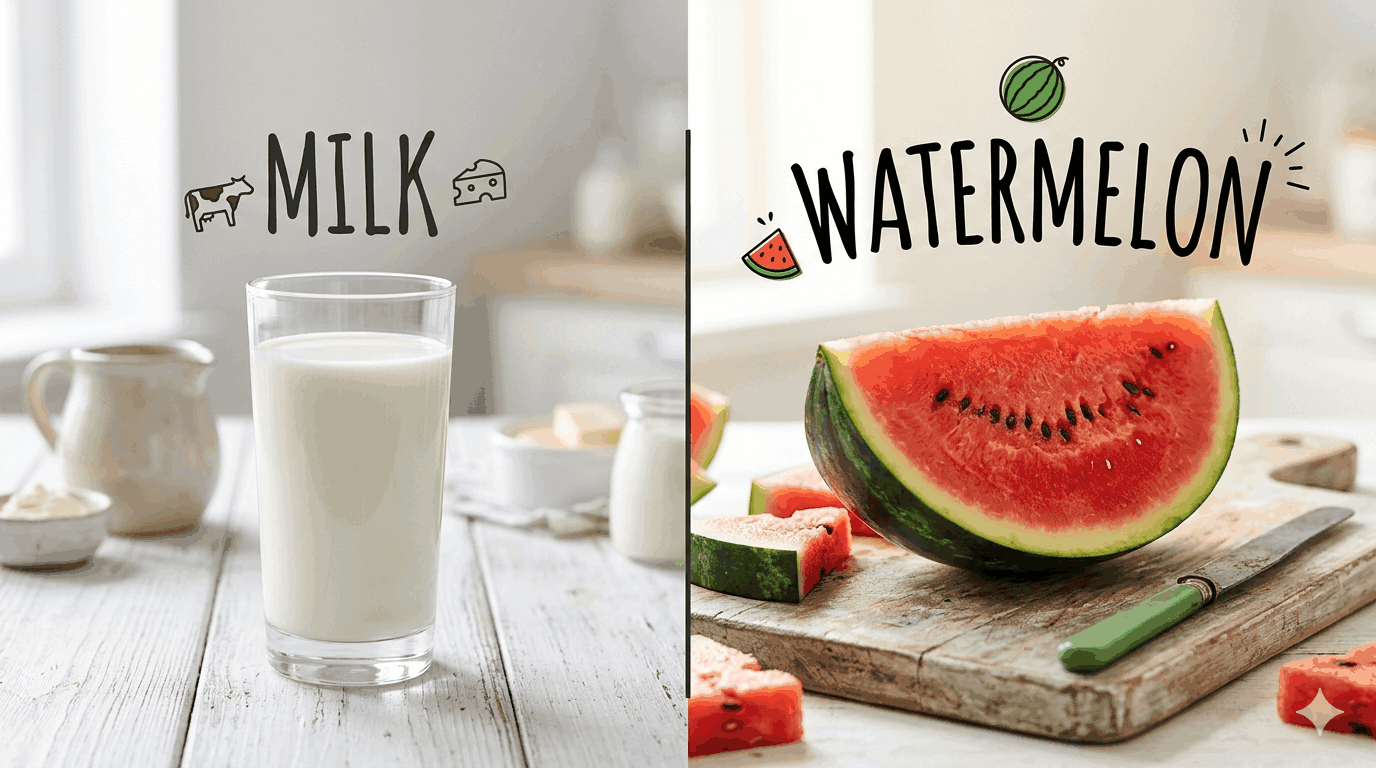
We’ve all been there—it’s a hot afternoon, you have a juicy slice of watermelon in one hand, and a cold milkshake or glass of milk seems like the perfect pairing. But according to traditional wellness wisdom and nutritional science, combining these two is a recipe for a bad time.
If you want to avoid a “stomach emergency,” here is exactly why this duo should stay far apart.
1. The Speed Trap (Digestion Rates)
Watermelon is mostly water and simple sugars. It is designed to be digested incredibly fast, often leaving the stomach within 20–30 minutes. Milk, on the other hand, is packed with proteins and fats that require a much more complex, slow-burning process.
The Result: When you eat them together, the watermelon gets “trapped” behind the slow-moving milk. It begins to ferment in your gut while waiting its turn to be processed, leading to gas, bloating, and that “heavy” feeling.
2. The Acid vs. Enzyme Battle
Milk is a heavy alkaline-forming food, while watermelon has slightly acidic properties. From a biochemical perspective, the enzymes needed to break down milk are inhibited by the presence of the fruit’s acids.
The Curdling Effect: Think about what happens when you add lemon juice to milk. It curdles. While watermelon is less acidic than citrus, it can still cause the milk to coagulate in the stomach, making it much harder for your body to break down.
3. Ayurvedic “Incompatible Foods”
In Ayurveda, this is known as Viruddha Ahara (incompatible food combinations).
Milk is cooling and heavy.
Watermelon is also cooling but acts as a diuretic.
When you mix two “cooling” foods with different digestive requirements, you can dampen your Agni (digestive fire), which can lead to a toxic buildup known as Ama.