A stroke is a life-altering event that often leaves survivors searching for ways to regain their independence. While traditional physical and speech therapies remain the gold standard, a breakthrough technology called Red Light Therapy (RLT)—also known as Photobiomodulation—is offering new hope for accelerating brain repair.
What is Red Light Therapy for the Brain?
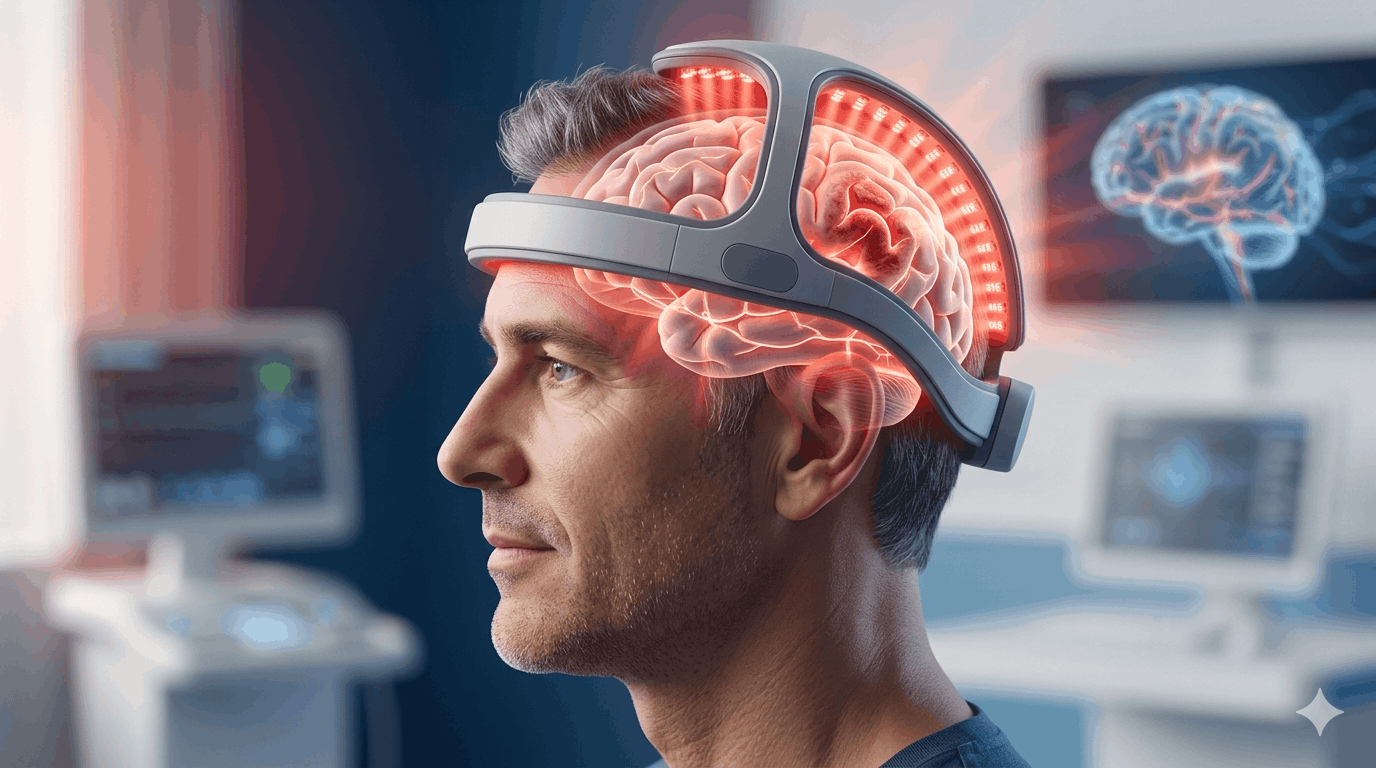
Unlike the red lights used for skin treatments, brain-focused RLT uses Near-Infrared (NIR) light. These specific wavelengths have the unique ability to penetrate the skull and reach the brain tissue directly. It doesn’t use heat or radiation; instead, it uses light energy to “recharge” damaged cells.
How It Supports Stroke Survivors
Recovery after a stroke depends on the brain’s ability to rewire itself. Here is how RLT assists that process:
Boosting Cellular Energy: The light is absorbed by the mitochondria (the power plants of your cells). This increases the production of ATP, giving damaged neurons the energy they need to repair and function again.
Enhancing Neuroplasticity: RLT stimulates the release of growth factors like BDNF, which acts as “brain fertilizer.” This helps the brain form new neural pathways to bypass areas damaged by the stroke.
Reducing Neuroinflammation: Inflammation in the brain can persist long after a stroke, slowing down recovery. RLT has been shown to calm this inflammation, creating a healthier environment for healing.
Improving Blood Flow: By triggering the release of nitric oxide, the therapy helps dilate blood vessels, ensuring that oxygen and vital nutrients reach the “recovery zone” of the brain.
What Does the Research Say?
Recent clinical trials have shown that when survivors use transcranial (through-the-skull) light therapy, they often see improvements in motor function, memory, and mood. Many users report a reduction in “brain fog” and improved sleep quality, which is crucial for the brain to heal.
Is It Safe?
One of the greatest advantages of Red Light Therapy is its safety profile. It is non-invasive, painless, and has no known major side effects. However, because every stroke is different, it is vital to consult with a neurologist before starting any new treatment hardware.
The Bottom Line
Red Light Therapy isn’t a “miracle cure,” but it is a powerful tool in the modern recovery toolkit. When combined with traditional rehabilitation, it provides the cellular spark needed to help the brain heal itself more effectively.
Social Media Tags: #StrokeRecovery #RedLightTherapy #Neuroscience #BrainHealth #HealthTech #StrokeSurvivor #Photobiomodulation #MedicalInnovation