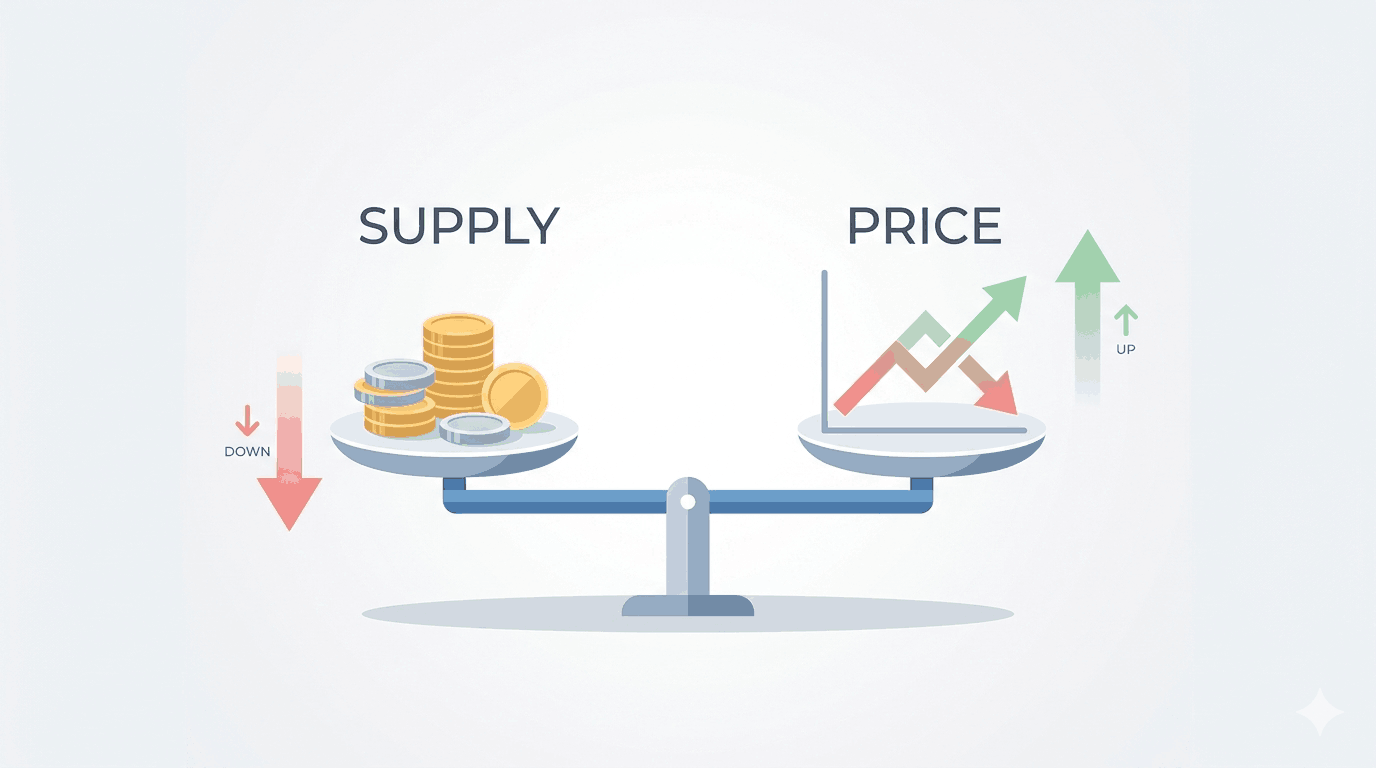
When people enter the crypto market, they often look at price charts, hype, or trending coins. But one of the most overlooked factors — and one of the most powerful — is circulating supply and token unlocks. If you truly understand this, you gain an edge that most retail traders completely ignore.
At its core, a crypto price is not just about demand — it’s about how much supply is actually available in the market. This is where circulating supply comes in. A token might have a total supply of billions, but if only a small percentage is circulating, the current price can be misleading. It may look cheap, but in reality, it’s sitting on a ticking time bomb of future dilution.
Take Sei as an example. With a total supply of around 10 billion tokens but only roughly a third currently in circulation, a large portion is still locked. These locked tokens are gradually released through scheduled unlocks — often to early investors, teams, and ecosystem funds. The moment these tokens enter the market, they increase supply and create selling pressure. This is one of the key reasons why a coin can show strong upward movement temporarily, only to fall sharply afterward. It’s not always weak demand — sometimes it’s simply too much new supply entering the system.
A similar pattern exists in Optimism, but in a more subtle way. Instead of sharp unlock-driven dumps, it follows a steady emission model. Tokens are continuously released through incentives and ecosystem rewards. The result is less dramatic crashes, but also weaker rallies. The price struggles to gain momentum because fresh supply keeps absorbing buying pressure. It’s what experienced traders often call a “slow bleed” structure — not dangerous in the short term, but frustrating over time.
On the other hand, Arbitrum presents a more balanced case. While it also started with a large locked supply, a significant portion has already been distributed. Unlock events still exist, but they are more predictable and less aggressive compared to newer tokens. This creates a relatively stable environment where price movements are influenced more by market sentiment and adoption rather than constant supply shocks. It doesn’t eliminate risk, but it reduces the intensity of sudden dumps.
What truly traps most investors is something called “fully diluted valuation” (FDV). This represents what the market cap would be if all tokens were already in circulation. Many low-priced coins appear attractive because their current market cap is small. However, when you factor in the total supply, the valuation becomes much larger. This hidden inflation potential is what prevents many coins from sustaining long-term growth. In simple terms, the market is not just pricing the present — it is slowly pricing in the future supply as well.
Understanding this changes how you approach trading and investing. Instead of chasing pumps, you begin to anticipate them. You notice how prices often rise before major unlock events due to hype, and then drop when the new supply hits the market. This pattern repeats more often than most people realize. Smart traders don’t buy during excitement — they wait for the aftermath, when excess supply has already pushed prices down.
In practical terms, tokens with low circulating supply relative to their total supply tend to be high-risk for long-term holding. They can deliver quick gains, especially during hype cycles, but they are also more vulnerable to sharp corrections. More mature tokens with higher circulating percentages tend to behave more predictably, making them better suited for swing trades or longer holds.
The real insight here is simple but powerful: price is not just about how many people want to buy — it’s about how many tokens are waiting to be sold. Until you understand both sides of that equation, you’re only seeing half the picture.
In crypto, supply doesn’t just exist — it arrives over time. And those who track its arrival are usually the ones who stay ahead of the market.