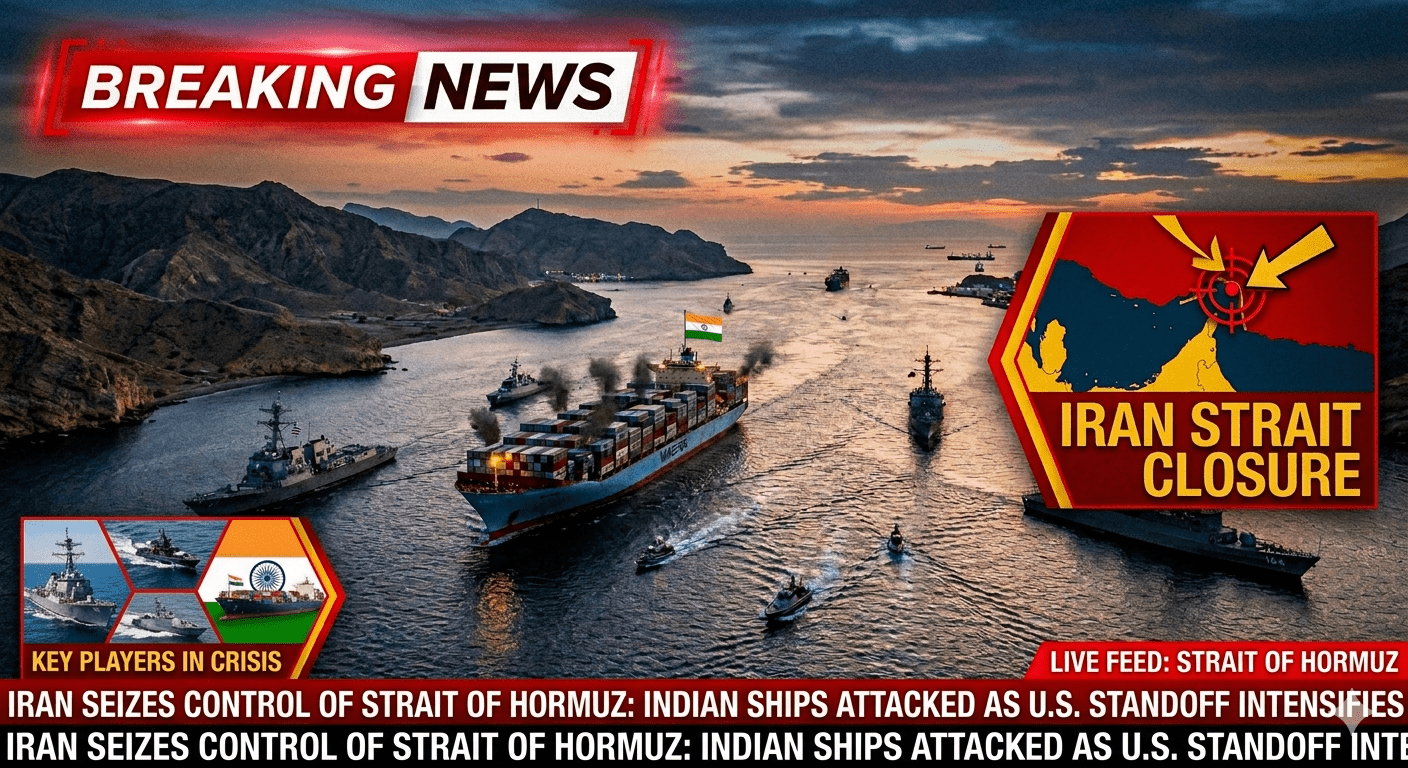
Iran has reimposed “strict control” over the Strait of Hormuz, blaming the ongoing U.S. naval blockade for the reversal. Just a day after declaring the vital shipping lane fully open, Iran’s military command announced that the waterway would return to its “previous state” under the management of the armed forces. The head of Iran’s National Security Commission said the closure was a direct response to “America’s untrustworthiness” and accused Washington of maintaining a blockade that has turned back more than 20 ships since Monday.
The Islamic Revolutionary Guard Corps (IRGC) has warned all vessels against approaching the strait, stating that doing so will be considered “cooperation with the enemy.”
In a statement published by the semi‑official Tasnim news agency, the IRGC said any violating vessel would be targeted and urged ships not to leave anchorage in the Persian Gulf or the Gulf of Oman. The IRGC also claimed that a confrontation with a U.S. minesweeper in the strait was narrowly avoided after Iran threatened to fire if the vessel moved forward.
Two Indian‑flagged merchant vessels came under gunfire while attempting to transit the strait, adding a dangerous new dimension to the crisis.
Maritime authorities reported that Iranian gunboats opened fire on the ships, forcing them to turn back. One of the vessels, the Sanmar Herald, was identified, and a distress audio recording captured a crew member shouting, “You gave me clearance to go! You are firing now! Let me turn back!” India’s Ministry of External Affairs expressed deep concern and said Iran had facilitated the safe passage of several other India‑bound ships, but the shooting incident has escalated fears for commercial shipping in one of the world’s busiest oil transit routes.
The U.S. has refused to lift its blockade, with President Trump saying Iran “can’t blackmail us.”
Trump convened a cabinet meeting in the situation room to discuss the strait, attended by Vice President JD Vance, Secretary of State Marco Rubio, Defense Secretary Pete Hegseth, and other top officials. Meanwhile, Iranian officials say new U.S. proposals are under review, but no date has been set for the next round of negotiations. Iranian Deputy Foreign Minister Saeed Khatibzadeh urged the U.S. to abandon its “maximalist position” and warned the media to be patient amid daily “fluctuations and ups and downs”.
The Strait of Hormuz is a critical chokepoint for global energy supplies, and the renewed restrictions threaten to disrupt oil shipments and raise prices worldwide.
The IRGC has made it clear that the strait will remain strictly controlled until the U.S. “restores full freedom of movement for vessels traveling to and from Iran”. With both sides trading public warnings and military forces on high alert, the risk of a broader confrontation looms large. The coming days will determine whether diplomacy can defuse the crisis or whether the world will witness another major flashpoint in the Middle East.
Sources: NBC News Live Blog (April 18‑19, 2026)
Keywords: strait of hormuz iran strict control us naval blockade indian ships under fire iran blames america for reimposing restrictions