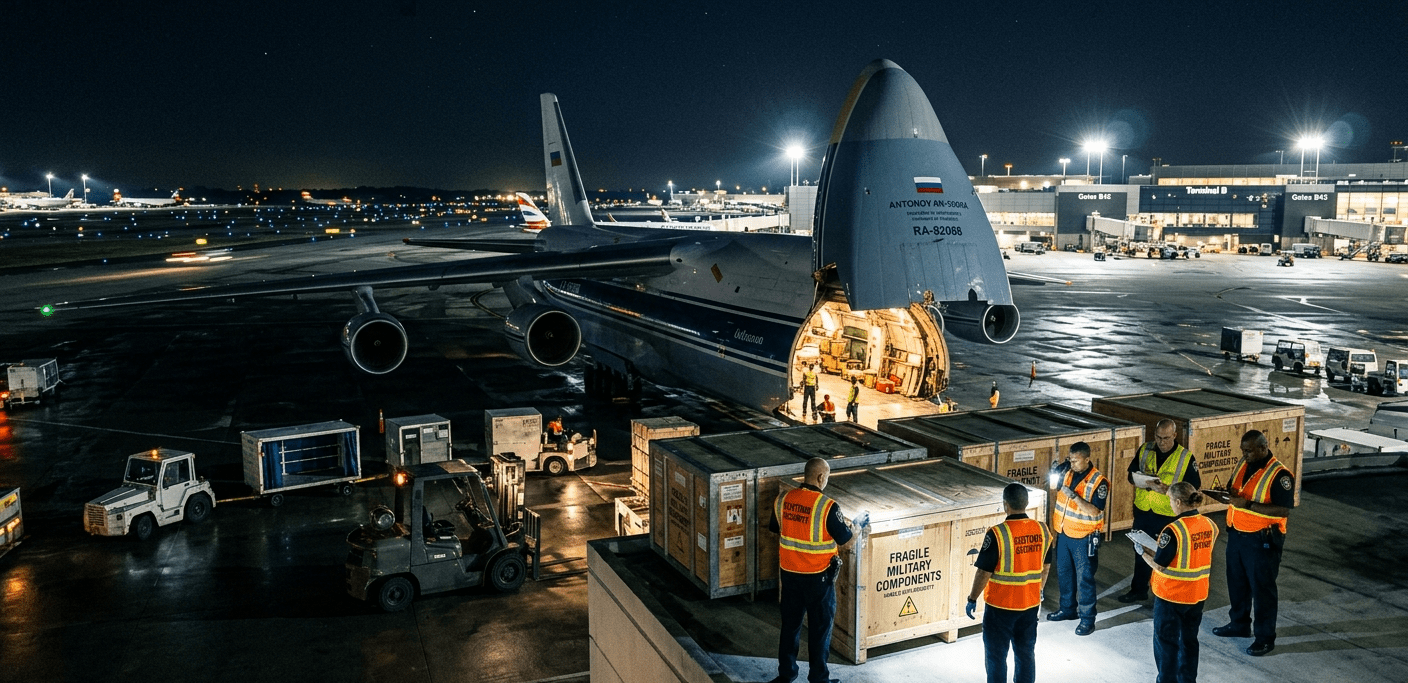
A major international scandal has emerged after Belgian customs officials at Liege Airport intercepted two unauthorized shipments of British military components bound for Israel. Despite the UK government’s public claims of suspending certain arms licenses, these seized shipments—containing fire control systems and aircraft spare parts—suggest a covert pipeline remains fully operational. The cargo, which arrived from Britain in late March, was intended for transport to Tel Aviv via Challenge Airlines before Belgian authorities intervened.
Legal Loopholes and Transit Routes
The seizure was not a random occurrence but the result of diligent tracking by a coalition of civil society organizations, including Declassified UK and the Palestinian Youth Movement. Investigation into the shipping documents revealed that no transit licenses had been requested for the military hardware. Belgian officials stated that had such a request been made, it would have been flatly refused under Belgium’s current prohibition on military equipment transiting to Israel. This incident highlights a significant gap between the UK’s stated foreign policy and the reality of its logistics.
The Role of Multinational Programs
While the UK government insists it has suspended licenses for equipment that could be used in Gaza, it has maintained a controversial exception for the F-35 fighter jet program. By classifying parts as “pool spares” for multinational programs, military hardware continues to move through layered supply chains. Activists argue that these components are essential for the operation of aircraft used in recent strikes. Recent data indicates that since the “suspension” was announced, over 100 new export licenses have still been issued, covering everything from radar systems to ammunition.
A Matter of Sovereignty and Accountability
The Belgian intervention is being viewed as a significant assertion of national sovereignty. By using Belgian soil to move military cargo without proper authorization, the exporters bypassed local laws. Political strategists suggest that the UK has been “carefully managing its image” while ensuring the substance of its arms relationship with Israel remains intact. For Belgium, the focus is now moving toward legal action. There are growing calls to prosecute the firms and officials involved in these transfers, as the international community looks closer at how national laws are being circumvented to fuel global conflicts.
The Growing Paper Trail
Recent reports indicate that the volume of British military items reaching Israel has actually seen a statistically significant increase in certain quarters. In one month alone in 2025, customs data recorded the highest value of UK military goods entering Israel since records began. This persistent flow of hardware, often reclassified or moved through third-party hubs like Liege, challenges the integrity of international arms treaties and raises urgent questions about the transparency of the global arms trade.
Sources: TRT World, Declassified UK, Vredesactie, The Ditch, Palestinian Youth Movement.