In the shadowy world of strategic warfare, a term exists that’s as chilling as it is precise: tactical nuke missile. This isn’t your traditional, city-leveling nuclear weapon. It’s a different beast, a specialized tool designed for specific, localized battlefield situations. Let’s delve into what these weapons are, how they function, and the ethical dilemmas that surround them.
What exactly is a tactical nuke missile?
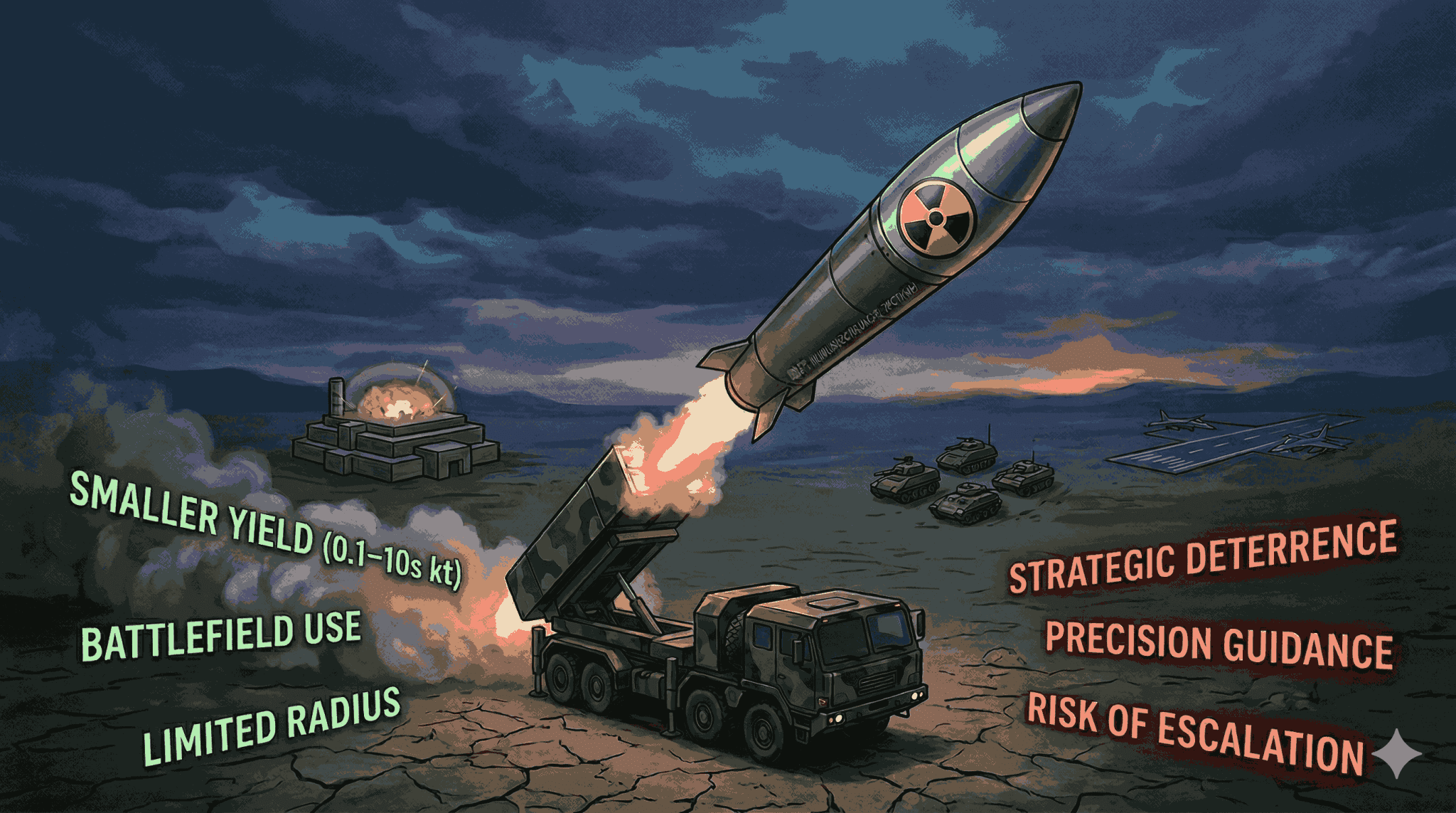
At its core, it’s a nuclear weapon designed with a significantly smaller yield (the amount of explosive power) than strategic nuclear weapons. Think of it like this: a strategic nuke is designed to destroy an entire city and decimate an enemy’s industrial and population centers. A tactical nuke is designed to neutralize specific military targets like a large troop concentration, a hardened bunker complex, or an airbase.
These weapons are typically delivered via missile, and they can be launched from various platforms including:
-
Short-range ballistic missiles: These are relatively small missiles that can be deployed from ground-based mobile launchers.
-
Cruise missiles: These are low-flying, steerable missiles that can be launched from land, sea, or air.
-
Artillery shells: While less common today, some tactical nuclear warheads were designed to be fired from heavy artillery pieces.
-
Air-dropped bombs: Fighter jets can also be configured to drop tactical nuclear bombs.
The yield of a tactical nuclear weapon typically ranges from less than one kiloton (which is still a massive explosion, comparable to thousands of tons of TNT) to several tens of kilotons. For perspective, the bomb dropped on Hiroshima had a yield of about 15 kilotons.
How do tactical nuke missiles work?
The fundamental principle is the same as any nuclear weapon: a nuclear fission reaction releases an incredible amount of energy. The warhead contains fissile material (like plutonium or uranium) that, when detonated, undergoes a chain reaction, splitting atoms and releasing energy in the form of a blinding flash, a massive fireball, and a devastating blast wave.
What sets tactical nuclear weapons apart is their specific design for battlefield use:
-
Smaller warheads: The warhead size is deliberately kept small to control the blast radius and minimize collateral damage to non-military targets (at least, in theory).
-
Delivery precision: Modern tactical nuclear missiles are equipped with sophisticated guidance systems to ensure high accuracy, allowing them to hit specific military objectives with minimal error.
-
Varying yields: Some tactical weapons have “dial-a-yield” capabilities, allowing commanders to adjust the explosive power of the warhead depending on the specific mission and target.
Why would anyone use a tactical nuke missile?
This is the billion-dollar question, and the answers are as complex as they are controversial. Proponents of tactical nuclear weapons argue that they serve a variety of strategic purposes:
-
Deterrence: The possession of tactical nuclear weapons can deter an adversary from launching a massive conventional attack, knowing that the response could be a limited nuclear strike.
-
Battlefield advantage: In a conventional war, tactical nuclear weapons can be used to destroy critical enemy assets, break through defensive lines, or stop a massive armor advance.
-
Counter-force capability: Tactical nuclear weapons can be used to target enemy nuclear delivery systems and command centers before they can be utilized.
However, the use of tactical nuclear weapons is fraught with immense danger and ethical complications. Opponents raise significant concerns:
-
Escalation risk: The biggest fear is that the use of a tactical nuclear weapon, no matter how limited, could escalate rapidly into a full-scale nuclear war, leading to global catastrophe.
-
Civilian casualties: Despite claims of precise targeting, the use of any nuclear weapon will invariably result in civilian casualties and massive destruction to infrastructure. The radioactive fallout can contaminate large areas, impacting human health and the environment for generations.
-
Ethical implications: The use of nuclear weapons is widely considered to be a violation of international humanitarian law and a crime against humanity. The moral arguments against their use are powerful and well-documented.
The Current State of Affairs
While the use of tactical nuclear weapons hasn’t occurred in actual warfare since the atomic bombings of Japan, the threat remains all too real. Several nations possess significant stockpiles of tactical nuclear weapons, and the geopolitical landscape is fraught with tensions.
The discussion surrounding tactical nuclear weapons is not simple. It’s a debate that pits perceived strategic military advantages against the catastrophic humanitarian consequences and the real risk of global annihilation. As we navigate the complex world of international relations and military technology, it’s crucial to understand the implications of these weapons and strive for a future where their use is never contemplated.