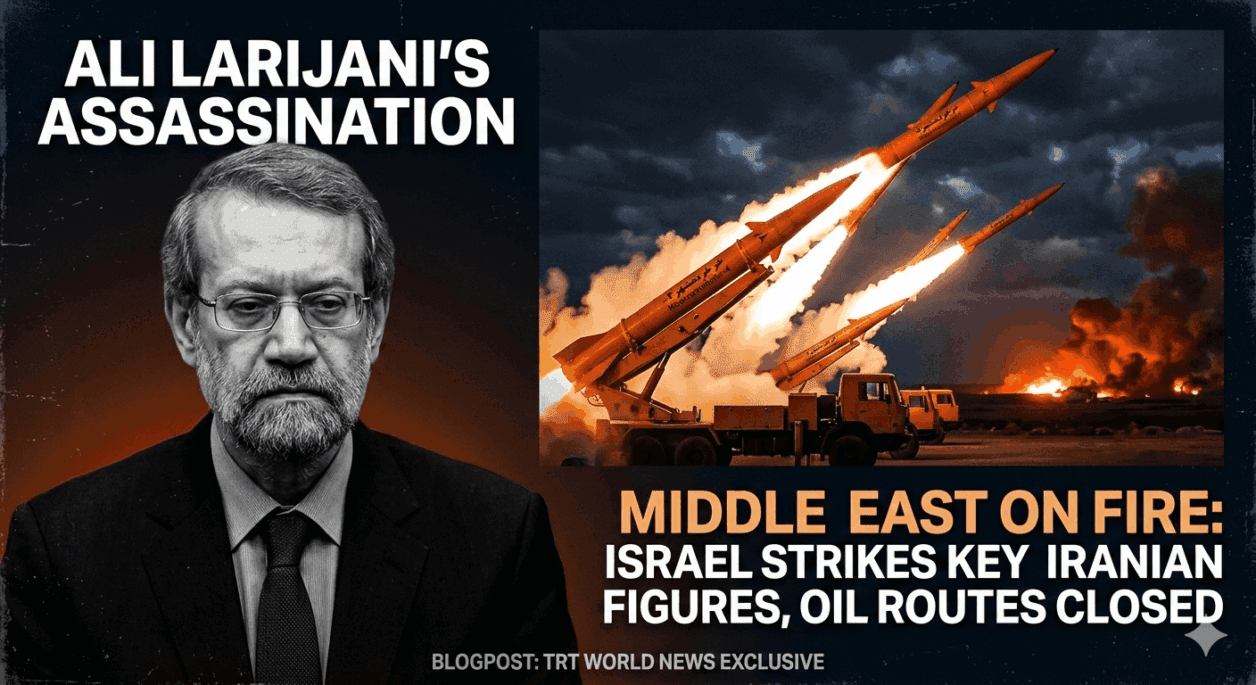
The Middle East stands at a perilous crossroads following reports that Israel has targeted and killed one of Iran’s most influential political and security figures. On Tuesday, Israeli Defence Minister Israel Katz claimed that Ali Larijani, the Secretary of Iran’s Supreme National Security Council, was “eliminated” in an overnight airstrike.
As the “War on Iran” narrative dominates global headlines, this development marks a significant escalation in the direct confrontation between the two regional powers.
Who was Ali Larijani?
Ali Larijani was far from a minor figure in the Iranian establishment. Often described as the “Man of the Moment,” Larijani was a seasoned diplomat and politician who served as:
Secretary of the Supreme National Security Council: A pivotal role in shaping Iran’s defense and foreign policy.
Former Speaker of the Parliament: Bridging the gap between Iran’s old-guard revolutionaries and the new era of governance.
A Key Negotiator: Known for his involvement in high-stakes international discussions, including the Iran nuclear deal.
The Strike: What We Know So Far
According to statements from the Israeli Ministry of Defence, the airstrikes targeted Larijani along with Gholamreza Soleimani, the commander of the Basij paramilitary force.
While Israel has been vocal about the success of the mission, Tehran’s initial response was marked by a tense silence, followed by confirmation from the Supreme National Security Council. Reports now indicate that Iran has launched retaliatory strikes using Khorramshahr-4 and Qadr multiple-warhead missiles, signaling that a “tit-for-tat” cycle of violence is in full swing.
Iran Confirms Death of Supreme National Security Council Secretary Ali Larijani
Global Economic and Geopolitical Impact
The repercussions of this assassination are being felt far beyond the borders of the Middle East:
1. Energy Market Volatility
The conflict has led to the closure of the Strait of Hormuz, a vital artery for global oil shipments. With nearly 90 vessels transiting the area regularly, any disruption sends shockwaves through energy markets, pushing oil prices higher and rattling global economies.
2. Airline Suspensions
Major carriers across Europe, the US, and Asia have extended flight suspensions to the region. The safety concerns regarding Middle Eastern airspace are currently at an all-time high, affecting international travel and logistics.
3. Diplomatic Strains
The strike comes at a time when diplomatic paths seemed tentatively open. Reports suggest that UK advisers believed a nuclear deal was within reach just before the outbreak of open hostilities. Now, world leaders, including Irish PM Micheal Martin and Ukrainian President Zelenskyy, are grappling with the fallout of a rapidly expanding war.
What’s Next?
The assassination of a figure as prominent as Ali Larijani is often viewed as a “red line.” With Iran vowing revenge and Israel continuing its operations in Beirut and Gaza, the international community is watching closely to see if this conflict can be contained or if it will spiral into a full-scale regional war.
Stay tuned for more updates on the evolving situation in the Middle East.