In times of global uncertainty, few numbers matter more than the countdown on the world’s strategic oil reserves. Following the recent Middle East energy crisis in early 2026, that number became the focal point for policymakers, economists, and global markets. According to a comprehensive analysis of IEA stockholdings, the question on everyone’s mind is: how many days of oil are left for IEA member countries?
The Current Figure: A 50-Day Bridge
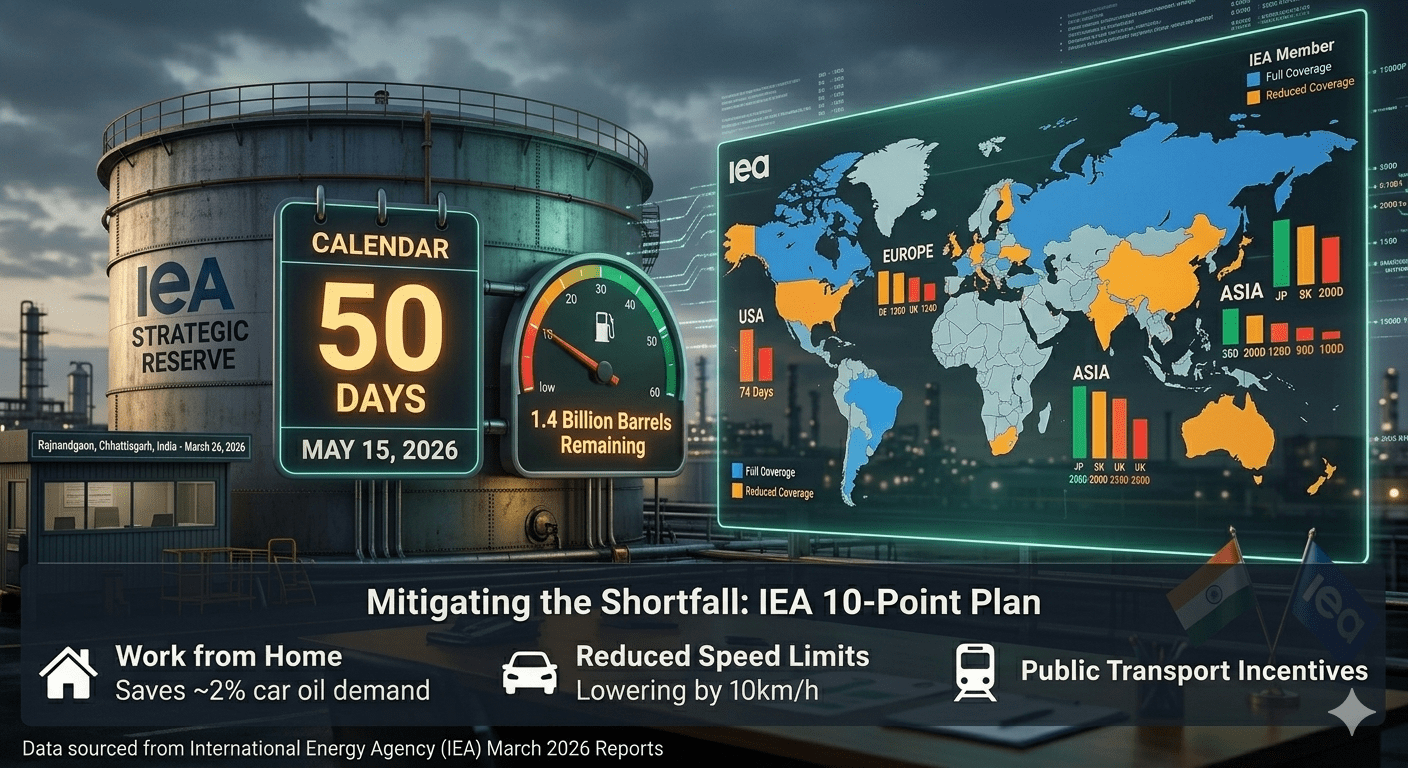
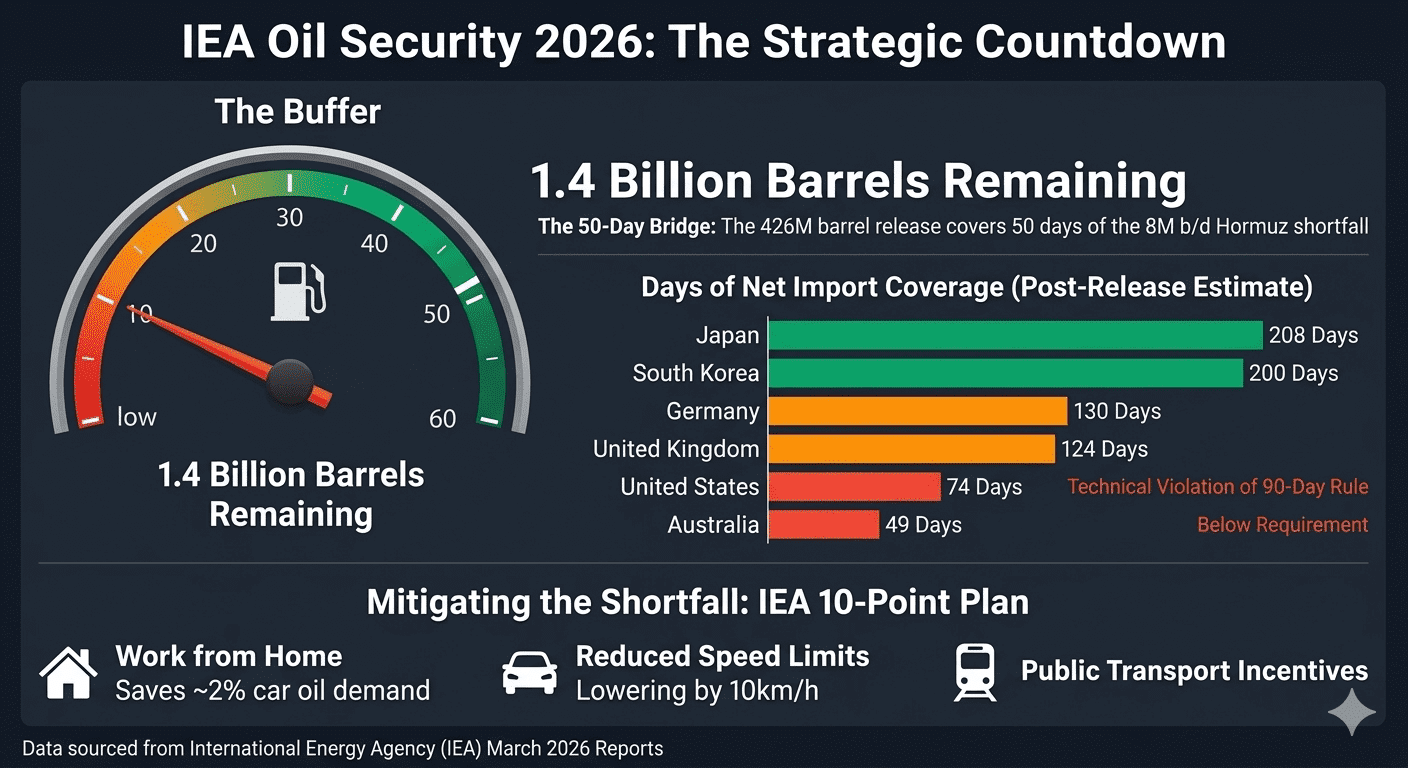
The latest data reveals a precise and sobering statistic. As of the coordinated collective action taken in March 2026, IEA member countries have approximately 50 days of oil supply remaining if relying solely on government-controlled strategic petroleum reserves.
This figure does not represent the world running out of oil entirely. Rather, it represents the “bridge” period that the International Energy Agency (IEA) can cover through emergency stock releases to offset sudden supply disruptions. The analysis highlights that this 50-day window is designed to give markets time to stabilize and for commercial supply chains to reroute.
How the Reserves Are Structured
To understand the 50-day figure, it helps to look at the breakdown of the stockpiles. The IEA mandates that member countries hold oil stocks equivalent to at least 90 days of the previous year’s net imports.
However, the recent crisis prompted a collective action where reserves were released in a targeted manner. The United States led the drawdown from its Strategic Petroleum Reserve (SPR), while Japan and South Korea—known for their “strategic over-compliance”—contributed significant volumes from their vast storage facilities. European contributions focused heavily on product reserves, particularly diesel and gasoline, to address specific refinery bottlenecks.
Regional Variations in Supply
The 50-day average masks significant regional differences:
The Americas: The U.S. SPR remains the largest single source of emergency crude, though it has been drawn down to levels that have sparked political debate. Canada and Mexico provide production flexibility rather than just stored reserves.
Europe: European nations hold a mix of crude and refined products. The analysis notes a vulnerability in Europe’s downstream sector, where refining capacity constraints mean that having crude oil does not always immediately translate into usable gasoline or diesel.
Asia-Pacific: Japan and South Korea maintain the highest stockholding levels relative to consumption, giving them the longest individual runway in a crisis scenario.
Why the 50-Day Number Matters
The concept of “days of oil left” is less about a countdown to zero and more about a timeline for resolution. The IEA’s 10-Point Plan for demand-side mitigation—which includes measures like reducing speed limits, boosting public transport, and temporary work-from-home orders—works in tandem with these stockpiles to stretch the supply further.
If the geopolitical disruption lasts longer than 50 days without alternative supply chains coming online or demand measures taking effect, the global energy market would enter a new, more volatile phase.
Looking Ahead: Rebuilding the Stockpiles
Currently, the focus is shifting from drawdown to replenishment. The analysis suggests that future market stability depends on how quickly IEA members can rebuild their strategic reserves. A failure to do so could leave the global community with a smaller safety net in the event of a future crisis, making prices more susceptible to speculation and supply shocks.
Conclusion
As of the latest assessment following the 2026 Middle East crisis, IEA member countries have approximately 50 days of oil left in their collective strategic reserves. While this provides a crucial buffer, it underscores the fragility of global energy security. For consumers and businesses, this number serves as a reminder of the delicate balance between geopolitical stability and the fuel that powers the global economy.
Source: my Own Research