The geopolitical standoff between the United States and Iran has reached a critical breaking point. As President Donald Trump’s Tuesday deadline looms, Tehran has formally rejected the ultimatum to reopen the Strait of Hormuz, escalating fears of a wider conflict that threatens to choke the global energy supply.
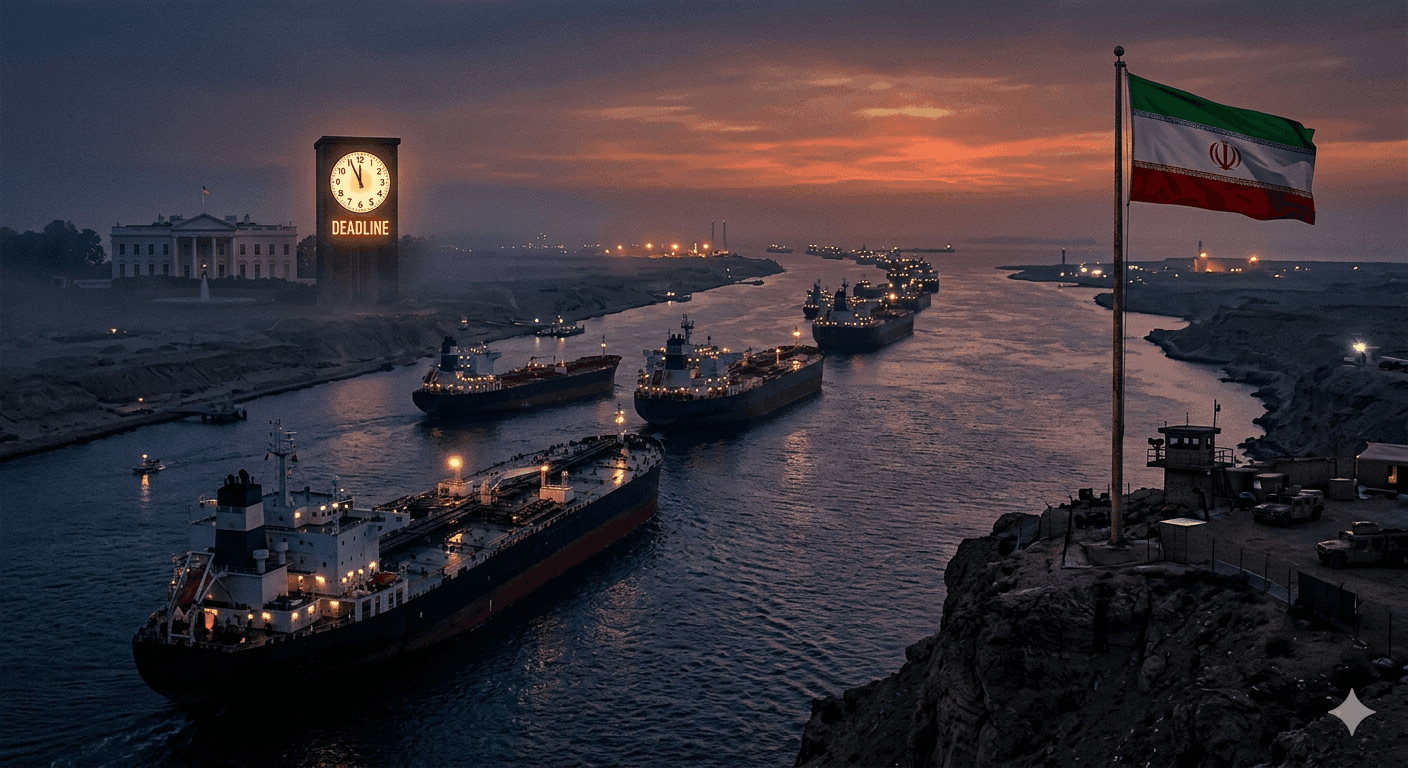
The Core of the Ultimatum. President Trump set a firm deadline for Tuesday at 8:00 PM Eastern Time (midnight GMT) for Iran to fully reopen the strategic Strait of Hormuz to international shipping. In a series of dramatic social media posts, Trump declared that if Tehran failed to comply, “Tuesday will be Power Plant Day, and Bridge Day, all wrapped up in one, in Iran.” He warned that the country could be “taken out in one night”.
Iran’s Defiant Stance. Tehran, however, has shown no sign of backing down. Through state-run IRNA news agency, Iran rejected a temporary 45-day ceasefire proposal that would have involved reopening the waterway. Instead, Iranian officials insist on a permanent end to the war with “guarantees that we won’t be attacked again”. Mojtaba Ferdousi Pour, head of Iran’s diplomatic mission in Cairo, clarified that a mere temporary truce is insufficient because Iran no longer trusts the US administration after previous rounds of bombings during talks.
A War Crimes Accusation. The rhetoric has intensified beyond diplomacy. Iran’s Foreign Ministry spokesperson, Esmaeil Baghaei, condemned Trump’s threats as “an indication of a criminal mindset” and an incitement to war crimes. This view is shared by several Democratic US Senators, including Chris Murphy, who described the planned destruction of civilian bridges and power plants as a “clear war crime”.
The Global Economic Impact. The conflict is already shaking the world economy. The Strait of Hormuz is a vital artery for global trade, with roughly 20% of the world’s oil passing through it in peacetime. With the strait effectively closed, oil prices have surged dramatically. Brent crude, the international benchmark, rose to $109 in early Monday trading, a staggering 50% above pre-war levels. US crude briefly topped $114 per barrel as markets reacted to the threat of supply disruption.
The Human Toll. The threats and counter-threats are unfolding amidst ongoing bloodshed. US-Israeli attacks across Iran have killed at least 34 people, including six children, according to Al Jazeera’s live updates. An Israeli strike specifically targeted the South Pars petrochemical plant in Asaluyeh, responsible for about 50% of Iran’s petrochemical production. Meanwhile, Iran has retaliated with missile fire targeting Israel and its Gulf neighbors, hitting a residential building in Haifa and energy infrastructure in Kuwait and Bahrain.
What Happens Next? While Trump described the Iranian proposal to end the war as a “significant step,” he maintains it is “not good enough” and that his deadline is final. With the clock ticking, the world watches to see if diplomacy can prevail or if Tuesday will indeed mark a devastating new chapter in this conflict. For now, the region remains on a knife’s edge, with Tehran warning that any misstep could lead to the targeting of other key maritime chokepoints, such as the Bab al-Mandeb Strait.
Sources: Al Jazeera, Associated Press (AP), Reuters, IRNA