We are living through a moment that arms control experts have feared for decades. The war that erupted in the Middle East on February 28, 2026, is unlike any conflict before it—because for the first time, nuclear facilities are not just background concerns but direct military targets. The World Health Organization (WHO) and the International Atomic Energy Agency (IAEA) have issued rare joint warnings, and the question on everyone’s mind is no longer hypothetical: could this war go nuclear?
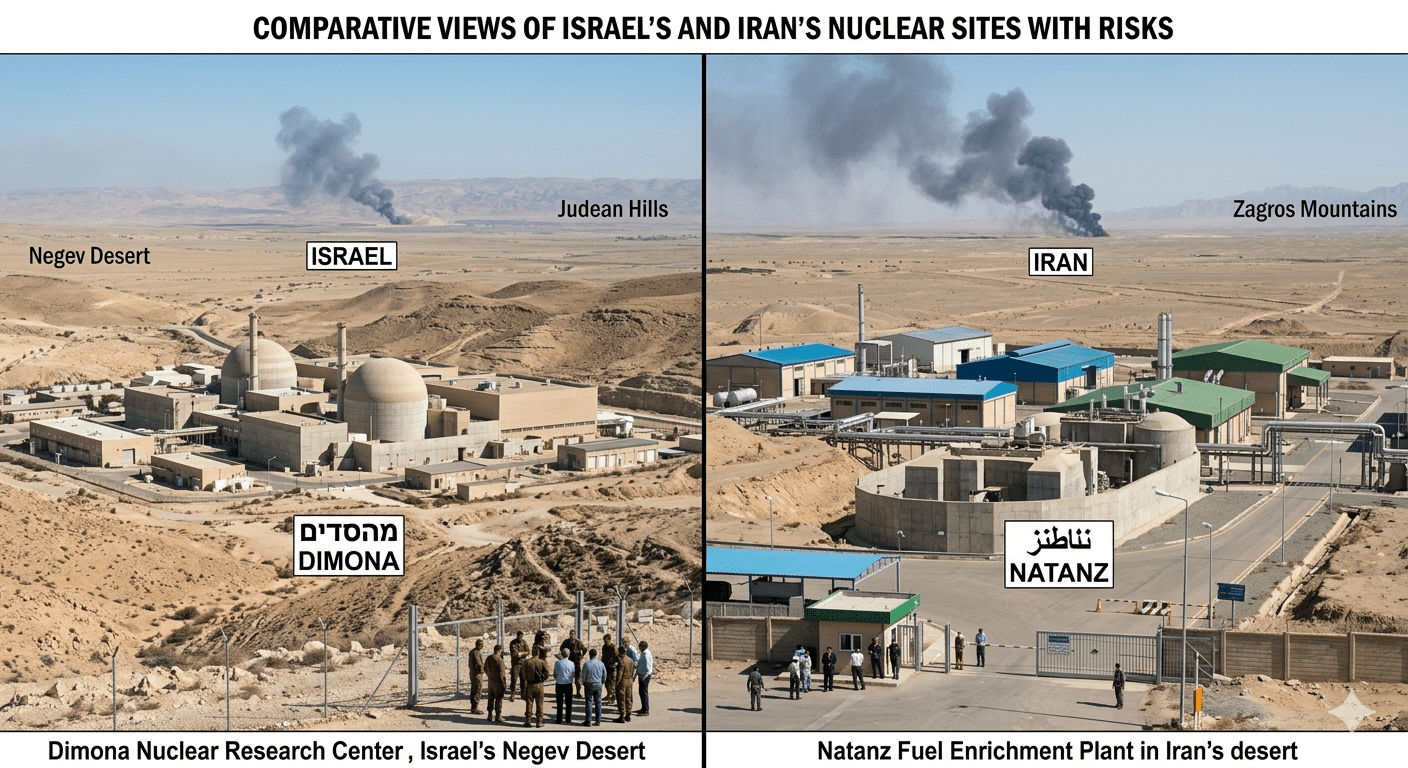
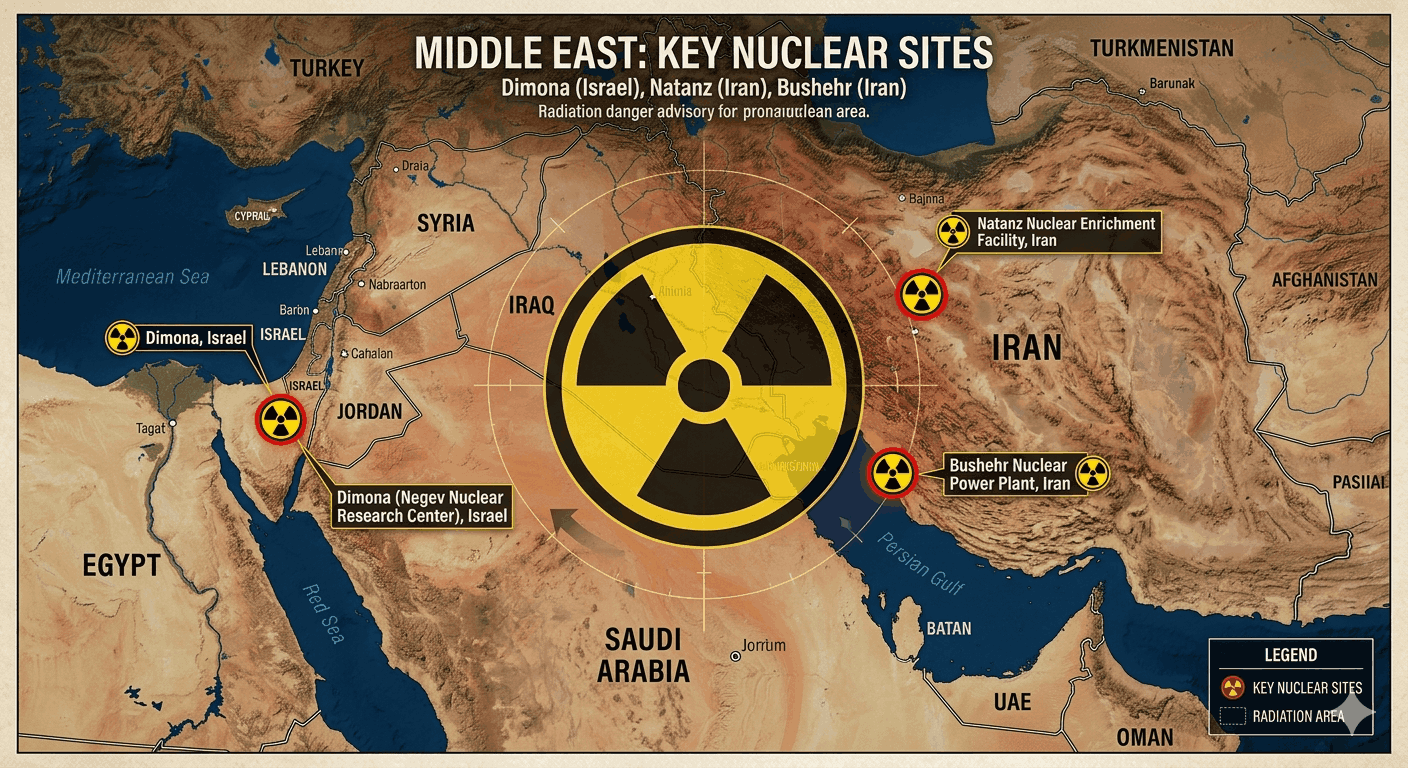
The war is being fought AT nuclear facilities. In a dramatic escalation, the United States and Israel have repeatedly struck Iran’s Natanz uranium enrichment facility, a site so sensitive that its destruction could set Iran’s nuclear program back years. Iran has responded in kind, launching missiles at the city of Dimona in southern Israel, home to the Negev Nuclear Research Center—widely believed to be the heart of Israel’s undeclared nuclear arsenal. On March 21, a missile strike near Dimona wounded over 100 people, marking the first time a nuclear site has been directly targeted in this conflict. The IAEA confirmed no radiation leaks so far, but the message is clear: the red lines are gone.
The immediate danger is not a bomb—it is an accident. WHO Director-General Tedros Adhanom Ghebreyesus warned on March 22 that “attacks targeting nuclear sites create an escalating threat to public health and environmental safety.” Even without a nuclear weapon being used, a conventional strike on a reactor or spent fuel storage could trigger a radiological disaster worse than Chernobyl. The IAEA has confirmed it is investigating incidents at both Natanz and Dimona, and officials are urging “maximum military restraint” before it is too late.
Israel’s “Samson Doctrine” is the elephant in the room. For decades, Israel has maintained a policy of nuclear ambiguity, but it is universally treated as the region’s only nuclear-armed state. The so-called Samson Option—named after the biblical figure who brought down a temple on himself and his enemies—holds that if Israel’s existence is truly threatened, it would respond with overwhelming nuclear force. Right now, the war has not reached that existential threshold. But Iran has successfully struck Israeli cities, and Israeli infrastructure like the Haifa Oil Refinery has been hit. If the conflict widens further and Israel faces collapse on multiple fronts, that calculus could change.
Iran faces its own nuclear dilemma. Prior to the war, Iran was enriching uranium to 60 percent purity—a short technical step from weapons-grade material. Tehran has long maintained it does not seek a bomb, but the ongoing attacks are creating massive pressure on hardliners to change course. Russian Foreign Minister Sergei Lavrov recently warned that the US-Israeli strikes could backfire by pushing Iran to dash for a nuclear weapon before its capabilities are destroyed. If Iran makes that choice, it could trigger a preemptive Israeli or US strike—potentially the first nuclear exchange since 1945.
A regional arms race is already being set in motion. Even if the immediate fighting does not produce a mushroom cloud, the war is dismantling the non-proliferation architecture of the Middle East. Saudi Arabia has long stated that if Iran gets a nuclear weapon, “we will have to get one.” Turkey and Egypt, both regional powers with advanced industrial bases, would likely follow. The result would be a cascade of nuclear proliferation across the region, shattering the global non-proliferation regime built over half a century. Experts call this the “perfect storm” scenario.
The world is holding its breath. The IAEA continues to monitor, but its inspectors cannot operate in active war zones. The WHO has already trained staff across 13 countries to respond to a potential nuclear incident. President Trump has issued ultimatums to Iran over the Strait of Hormuz, threatening to “obliterate” Iranian power plants. Diplomatic calls for restraint are being ignored.
So what are the actual possibilities? The most likely nuclear scenario remains an accidental radiological release from a strike on a reactor or storage site—a disaster that would contaminate cities and displace millions. The deliberate use of a nuclear weapon is less likely but no longer unthinkable, especially if either side perceives its survival is at stake. And regardless of how this war ends, the Middle East will never be the same. The nuclear dominoes are wobbling.
Sources:
World Health Organization (WHO) statement via IANS, March 22, 2026
International Atomic Energy Agency (IAEA) statements via IANS and Newsweek, March 21-22, 2026
The Wire: “The Samson Doctrine: Israel’s Nuclear ‘Doomsday’ Option,” March 10, 2026
Center for Arms Control and Non-Proliferation analysis
焦點時報 analysis of Israeli nuclear strategy, March 17, 2026
Newsweek: “IAEA Responds to Nuclear Facility Damage Fears,” March 21, 2026
Xinhua interview with WHO spokesperson Christian Lindmeier, March 20, 2026