Remember 2024? We were all obsessed with our smartwatches telling us we were stressed. We’d look at a red bar on a screen, sigh deeply, and then… keep being stressed. It was the era of “Data Without Directions.”
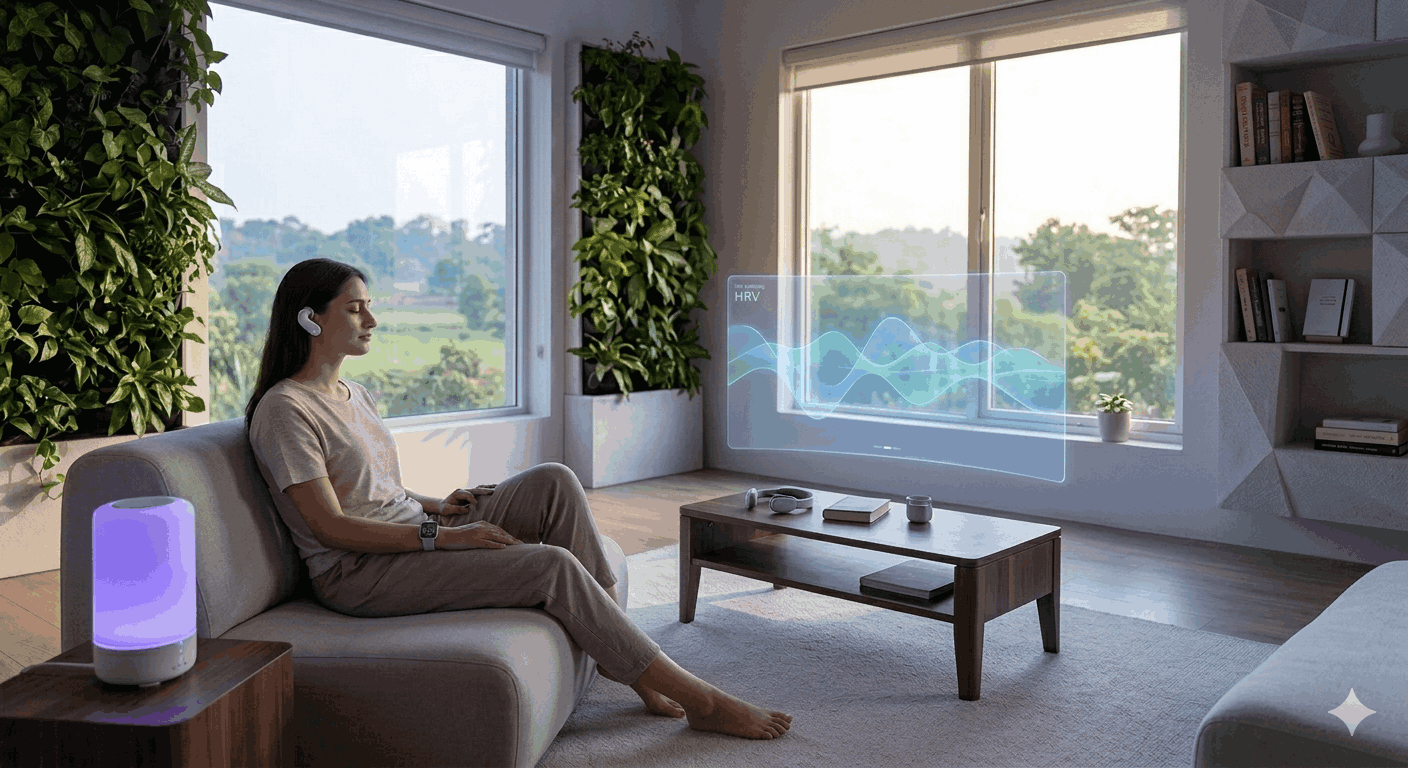
Fast forward to today. The conversation has shifted. We’ve realized that knowing your Heart Rate Variability (HRV) is low isn’t enough; we want the “manual override” button for our biology. Welcome to the era of Neurowellness, where the goal isn’t just to measure the storm, but to calm it from your couch.
🧠 From “Hustle Culture” to “Nervous System Safety”
For decades, we treated our bodies like machines that needed more fuel or better oil. But in 2026, we’ve finally admitted that we are biological organisms running on 50,000-year-old hardware. Our nervous systems weren’t designed to process a 24/7 global news cycle and 400 Slack notifications.
The new status symbol isn’t a $500 watch that tells you that you’re tired; it’s the $500 headband that actually helps you sleep. We’ve moved from performance to regulation.
🛠️ The “Hard-Care” Toolkit: Gadgets for the Soul
If you look at a typical 2026 coffee table, you’re likely to see more than just a remote. “Hard-care” tech has gone mainstream:
-
Vagus Nerve Stimulators (VNS): Small, sleek wearables that clip onto your ear or sit on your chest. By sending a tiny, imperceptible electrical pulse to the vagus nerve, they “manually” flip your body’s switch from Fight-or-Flight to Rest-and-Digest in under ten minutes.
-
Next-Gen Neurofeedback: We’ve moved past basic meditation apps. Devices like the latest EEG headbands now use real-time soundscapes that shift based on your brainwaves. If your mind wanders, the “weather” in your headphones gets stormier, gently nudging you back to a flow state.
-
Acoustic Vagus Tuning: Using localized vibration and low-frequency sound, these devices “hum” your nervous system into a state of resonance. It’s essentially a high-tech version of a Tibetan singing bowl, but backed by clinical data.
🌊 The “Soft-Care” Alternatives: The Built-In Kill Switch
You don’t need a Silicon Valley startup to regulate your system. Some of the most effective tools in 2026 are completely free and built into your DNA:
The 4-7-8 Breath: It’s the biological equivalent of holding down the power button to force a restart. Inhale for 4, hold for 7, exhale for 8. The long exhale is the key—it signals to your brain that there is no immediate threat.
-
Somatic Shaking: Have you noticed people “shaking it out” in their living rooms lately? It’s not a new dance craze; it’s a way to discharge literal adrenaline from the muscles, mimicking how animals recover after a chase.
-
The Mammalian Dive Reflex: A simple splash of ice-cold water on the face. It’s brutal, it’s low-tech, and it works instantly to lower your heart rate.
⚖️ The Reality Check: Science vs. “Neurosuggestion”
A touch of candor is necessary here: tech is a tool, not a cure. While VNS and neurofeedback are transformative for many, there is a significant “placebo” element—what some call Neurosuggestion.
The gold standard for checking if your “living room regulation” is actually working? HRV (Heart Rate Variability). If your HRV isn’t trending upward over weeks of using these tools, you might just be wearing an expensive, buzzing paperweight.
The Bottom Line
In 2026, your home is more than just a place to live—it’s a Regulation Station. Whether you’re using a high-tech earclip or just breathing deeply while the coffee brews, the goal is the same: teaching your body that, for right now, it is safe.