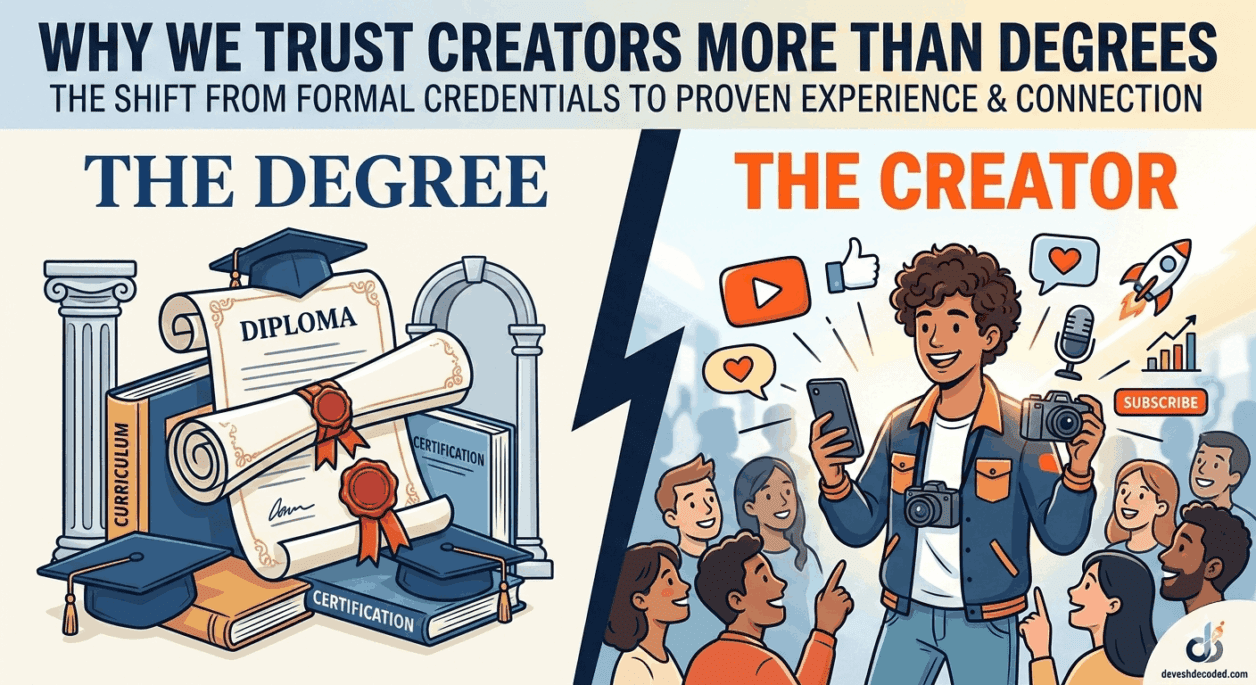
For decades, we looked to the “person in the white coat” or the academic with a wall full of degrees for advice. But lately, if you look at where people actually get their health tips, financial hacks, or skincare routines, it’s not from a textbook—it’s from a person filming a video in their living room. It feels a bit backwards, doesn’t it? Why would we trust someone with a ring light more than someone with a PhD? The answer isn’t that we’ve become less intelligent; it’s that the nature of trust has changed.
The power of “just like me” is the first major factor. Experts often sit on a pedestal, speaking in technical jargon and delivering facts from a distance. While they have the data, they often lack the relatability that humans crave. Influencers, on the other hand, build their entire brand on being “real.” When an influencer shares a struggle—like a failed diet or a messy house—it creates a connection. We feel like we know them, and because we trust them as a “friend,” we naturally extend that trust to their recommendations. We don’t just want the best product; we want the product that worked for someone who lives a life similar to ours.
Information vs Transformation
We also tend to prioritize transformation over raw information. Experts are great at telling us what something is by providing data, chemical compounds, or economic theories. However, influencers are masters at showing us how it feels. While an expert might tell you a specific vitamin is essential for health, an influencer shows you how they have more energy to play with their kids after taking it. We are wired to respond to stories, not spreadsheets. Influencers turn dry information into a lifestyle change that feels achievable. They provide a roadmap that looks fun, whereas experts often provide a manual that feels like homework.
The Speed of Social Proof
The speed of social proof has replaced traditional credentials. In the digital age, we use “social proof” as a shortcut for quality. If an expert writes a peer-reviewed paper, it might take years to reach the public. If an influencer posts a product and thousands of people in the comments say it changed their life, we perceive that collective voice as more valid than a single clinical study. We’ve swapped institutional authority for community authority. It’s faster, it’s more interactive, and it feels more democratic—even if it isn’t always as accurate.
The bottom line is that trust today is less about what you know and more about how you make people feel. We gravitate toward influencers because they offer connection in an increasingly disconnected world. The challenge for us as consumers is finding the balance: listening to the influencer for the “how-to,” but double-checking with the expert for the “is it true?”