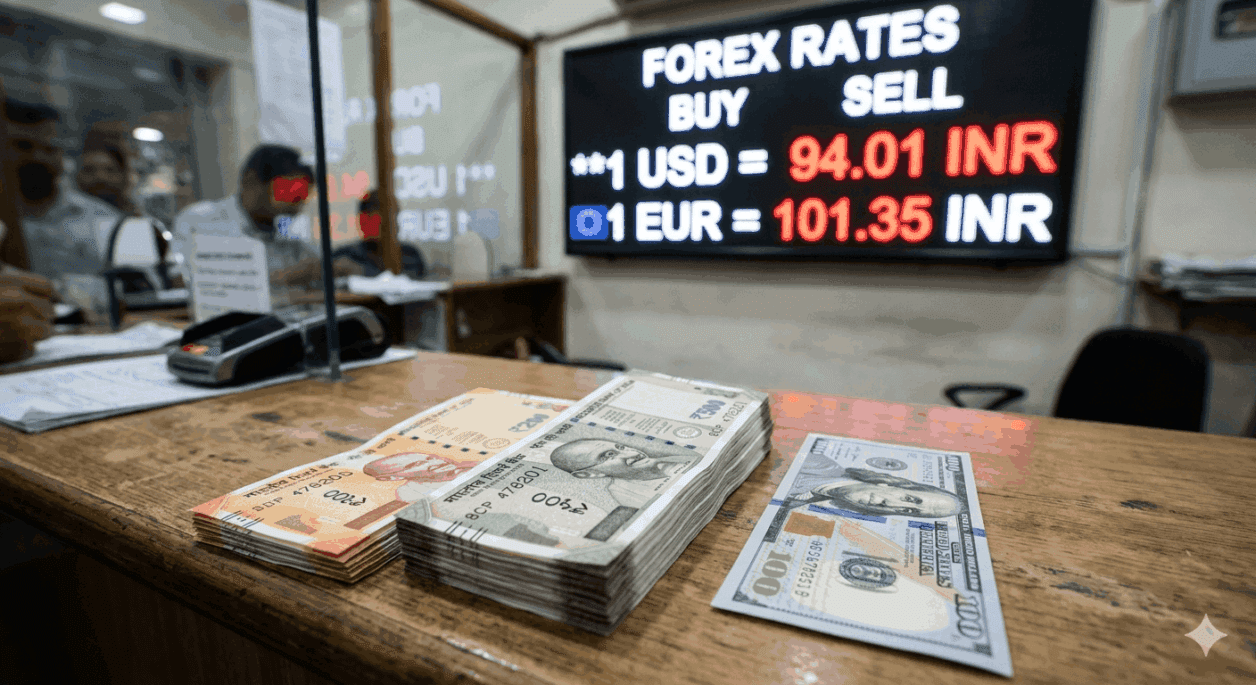
If you have checked the news today, you likely saw the concerning number: 94.01 Indian Rupees for 1 US Dollar. While that might just look like a statistic on a business channel, it is actually a direct signal that your cost of living is about to change. When the Rupee falls against the Dollar, it doesn’t just affect big corporations in Mumbai or Delhi—it reaches into your wallet, affects your monthly budget, and reshapes the Indian economy in ways you feel immediately.
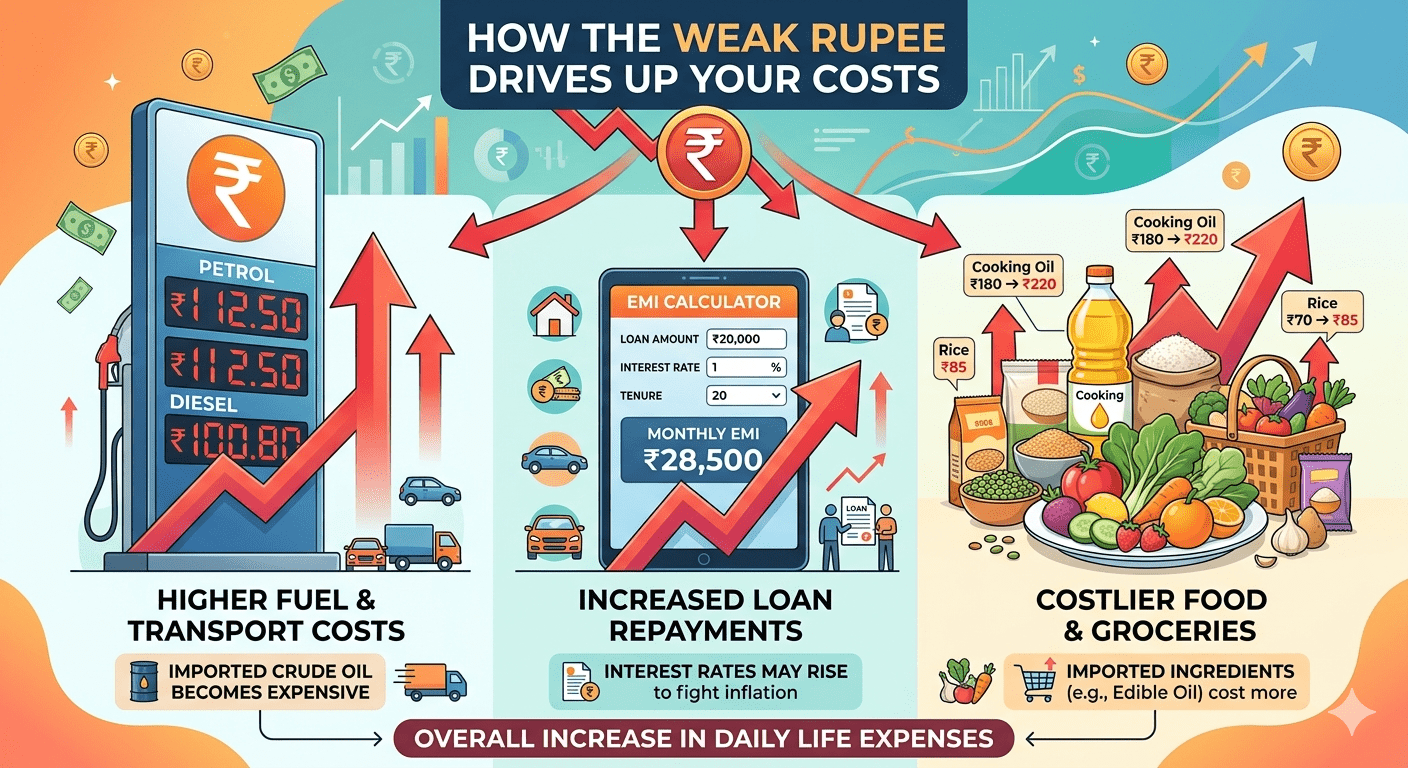
Let’s start with the most painful part: your daily expenses. India is one of the largest importers in the world, and we pay for almost everything critical in US Dollars. When 1 USD now costs ₹94.01, crude oil becomes more expensive for Indian refineries. Since oil prices dictate transportation costs, this means the price of petrol, diesel, and even the vegetables transported by trucks will rise. Furthermore, if you use imported electronics, cook with imported edible oils, or rely on any foreign-made medicines, you will see the prices ticking upward. This is imported inflation, and it is why your grocery bill feels heavier even when you buy the same items as last month.
If you are planning a vacation, you might want to reconsider your destination. International travel has become a luxury. A trip to the United States, Europe, or even Southeast Asia (where hotels are often priced in USD) will burn a massive hole in your savings because your Rupees simply do not stretch as far. However, there is a silver lining for domestic tourism. Hill stations like Manali, Ooty, and Kashmir are seeing a boom. Since flying abroad is too expensive, Indian families are rediscovering incredible local destinations, which is great news for the hospitality sector within the country.

Now, let’s talk about the winners in this scenario. While a weak Rupee hurts consumers, it is a massive advantage for Indian exporters. If you work in the IT sector, pharmaceuticals, textiles, or agriculture, a rate of ₹94.01 is excellent news. Indian services and goods become cheaper for foreign buyers. A US company paying for a software developer in Bengaluru or buying Indian basmati rice now gets more value for their Dollar. This usually leads to more contracts, more hiring, and a boost in the flow of foreign money into India, helping to balance the economic scales.
For those with loans, there is a specific risk to watch regarding foreign debt. If you have taken an education loan for a university abroad, or if your business has borrowed in Dollars, the Rupee drop is a crisis. Your debt just ballooned overnight. Even at a domestic level, while home loans aren’t directly tied to the Dollar, the Reserve Bank of India (RBI) often raises interest rates to defend the Rupee. This means your EMIs for home, car, or personal loans could increase as banks try to control inflation and stabilize the currency.
Finally, we have to address the psychological impact on savings. When the Rupee hits a historic low like 94.01, it creates a sense of uncertainty. Cash sitting idle in a savings account loses its purchasing power. Many Indian investors start looking for safe havens. Traditionally, this drives people toward gold (which tends to rally when the Rupee falls) and real estate. However, the most common reaction is a rush to buy Dollars or invest in US-focused mutual funds to preserve wealth, which unfortunately can put even more pressure on the Rupee to fall further.
Seeing the Rupee at 94.01 against the Dollar is unsettling, but it is important to understand the full picture. It means higher EMIs, expensive imports, and costly foreign travel—but it also means better times for exporters, a boost for domestic tourism, and potentially more foreign investment. For the average Indian, the best strategy right now is to budget carefully for rising fuel and food costs, avoid taking on new foreign-currency debt, and focus on long-term investments that historically hedge against inflation.
Keywords:
INR to USD Rupee against Dollar Rupee at 94 USD INR exchange rate falling Rupee impact Rupee depreciation effects INR vs USD today weak Rupee impact on India Rupee fall impact on common man Rupee vs Dollar today Rupee at 94.01 USD INR forecast why Rupee is falling against Dollar Rupee depreciation impact on Indian economy INR falling reasons how falling Rupee affects common man INR to USD today