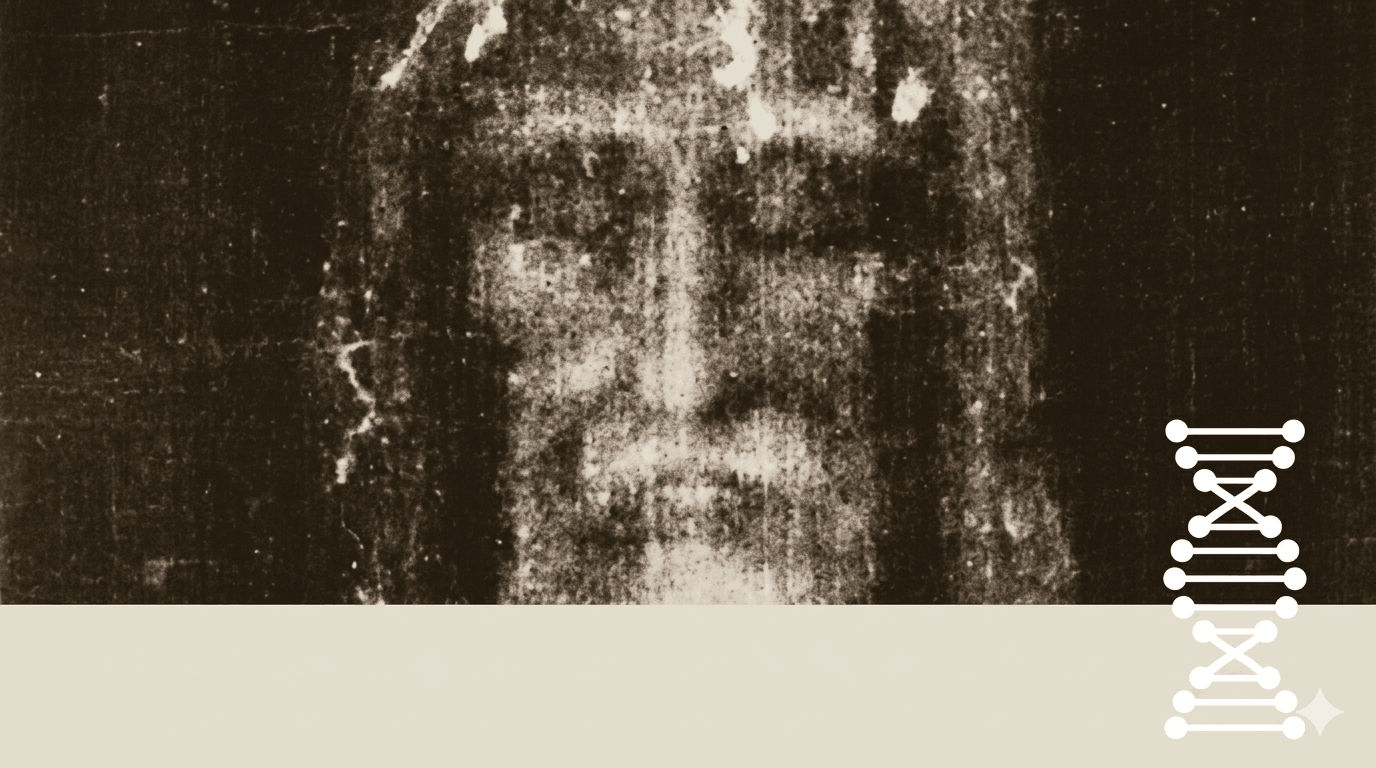
Recent genomic studies have sparked a viral debate by suggesting that the Shroud of Turin contains significant genetic material from the Indian subcontinent, potentially reshaping our understanding of the relic’s origins. This claim is primarily based on metagenomic analyses conducted by geneticist Gianni Barcaccia and his team, who analyzed dust and fibers collected from the Shroud in 1978 and 1988.
The Genetic Evidence for an Indian Connection The most provocative finding in these studies is that approximately 38.7% of the human mitochondrial DNA (mtDNA) identified on the Shroud belongs to haplogroups common in South Asia. While the largest share of human DNA (55.6%) is linked to Near Eastern lineages, the substantial “Indian trace” suggests the cloth had extensive contact with individuals of Indian descent or originated in the region. Furthermore, researchers identified DNA from the cowpea (Vigna unguiculata), a plant species native to India, trapped within the linen fibers.
Textile Trade and the “Sindon” Hypothesis Scientists hypothesize that the Shroud may have been manufactured in the Indus Valley or woven from yarn imported from that region. This theory is supported by several historical and linguistic clues:
Etymology: The Greek word for the Shroud, sindon, is linguistically linked by some scholars to “Sindh,” a region in modern-day Pakistan and India renowned in antiquity for its high-quality textiles.
Rabbinic References: Ancient Jewish texts refer to fine Indian linen as “Hindoyin,” noting its use in high-status garments, including the vestments of the High Priest in Jerusalem.
Trade Routes: Historical records confirm active maritime and terrestrial trade links between the Mediterranean and India during the Roman era, providing a plausible mechanism for the arrival of Indian textiles in Jerusalem.
A “Bio-Archive” of Global Travel Beyond the Indian signal, the Shroud acts as a biological “time-capsule” reflecting a diverse journey. In addition to Near Eastern and Indian signals, the analysis identified:
Levantine Traces: The presence of haplogroup H33, which is prevalent among the Druze population of the Levant.
Saline Environments: The detection of halophilic archaea—microorganisms that thrive in extremely salty conditions—suggests the Shroud may have been stored near the Dead Sea.
Global Contamination: DNA from New World plants like maize and peanuts, as well as Western European lineages, confirms that the cloth has been handled by numerous individuals and exposed to various environments in more recent centuries.
Scientific Limitations and Context Researchers caution that the high level of contamination makes it nearly impossible to isolate the “original” DNA of the man wrapped in the cloth. For example, the study identified the DNA of Pier Luigi Baima Bollone, the scientist who collected the samples in 1978. While the genomic data supports a “long chronology” that predates the 14th century, it does not provide definitive proof of the Shroud’s authenticity, but rather a complex “bio-history” of its social and ecological engagement across civilizations.