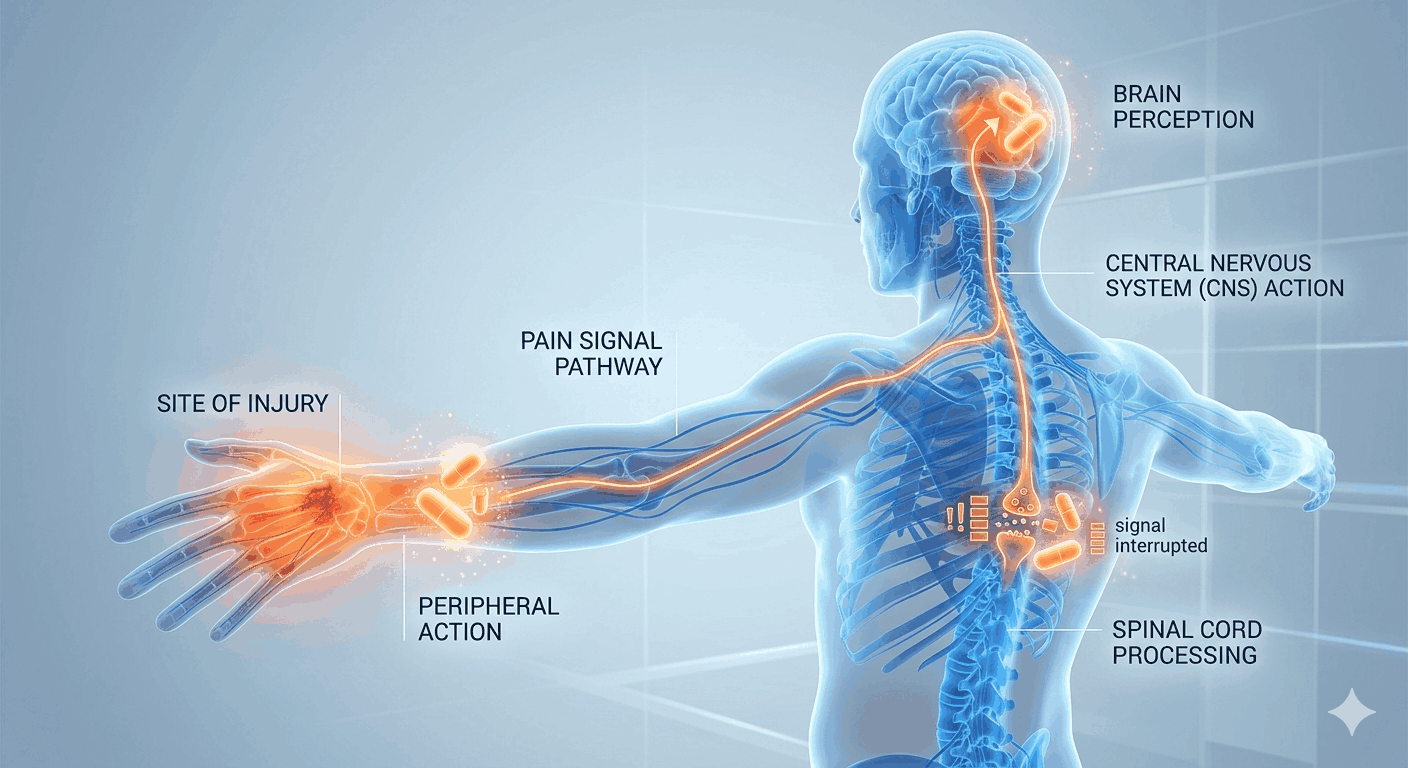
Have you ever wondered what actually happens inside your body when you take a painkiller? It’s not magic, but a fascinating biological process. Painkillers, or analgesics, work by interrupting the pain signal at different points along its journey from an injury to your brain. Your body produces chemicals called prostaglandins at the site of an injury, which essentially act like an “alarm system,” making nerve endings more sensitive and sending pain signals to the brain. Painkillers are designed to disable this alarm system or block its signals entirely.
The two main families of common painkillers are NSAIDs and Acetaminophen (Paracetamol). NSAIDs, like ibuprofen and naproxen, are the firefighters of the pain relief world. When you have a swollen ankle or an inflamed joint, the pain is largely caused by inflammation. NSAIDs work by blocking specific enzymes in your body called COX-1 and COX-2, which are responsible for producing those pain-causing prostaglandins. By inhibiting these enzymes, NSAIDs stop the production of the “alarm” chemicals, effectively reducing both the inflammation and the pain it causes.
Acetaminophen (Tylenol/Paracetamol), however, is a bit of a mystery. It’s one of the most widely used painkillers, yet its exact mechanism is still not 100% understood. The leading theory is that it works primarily in the central nervous system (your brain and spinal cord), where it selectively inhibits a specific version of the COX enzyme called COX-3, which also helps produce pain signals. Because it works mostly in the brain and not throughout the body, acetaminophen is very effective for headaches and fevers but, unlike NSAIDs, it has no effect on inflammation at the injury site.
For severe pain, doctors may prescribe powerful opioids. Drugs like morphine and codeine are a completely different class of painkillers. They don’t fight inflammation; instead, they change how your brain perceives pain. Opioids work by latching onto specific receptors on nerve cells in your brain and spinal cord, known as mu-opioid receptors. Think of them like a key turning off a switch. When they bind to these receptors, they block the release of neurotransmitters that would normally carry the pain signal onward, and they also “hyperpolarize” the nerve cells, making it much harder for them to fire an alarm. The result is that the pain signal is effectively muted before you consciously feel it.
So, which painkiller should you choose? It all depends on the source of your pain. For general headaches, fevers, or mild aches, acetaminophen is a safe, first-line option with fewer stomach side effects. For muscle strains, backaches, or joint pain where you see obvious swelling, an NSAID like ibuprofen is usually more effective because it targets the inflammation directly. Opioids are strictly for moderate to severe pain, like after a surgery or for advanced cancer pain, and they should only be used under a doctor’s strict supervision due to their high risk of tolerance and addiction.
Understanding how these medications work empowers you to use them safely and effectively. While these drugs are life-changing, they are not without risks. Never exceed the recommended daily dose of acetaminophen (4,000 mg) as it can cause severe liver damage, and be aware that long-term NSAID use can irritate the stomach or affect the kidneys. By matching the right type of painkiller to the specific kind of pain you have, you can get relief faster and safer, letting your body get back to feeling like itself.
Keywords: pain relief medication types and mechanisms explained NSAIDs vs acetaminophen vs opioids how do painkillers work in the body understanding analgesics for beginners