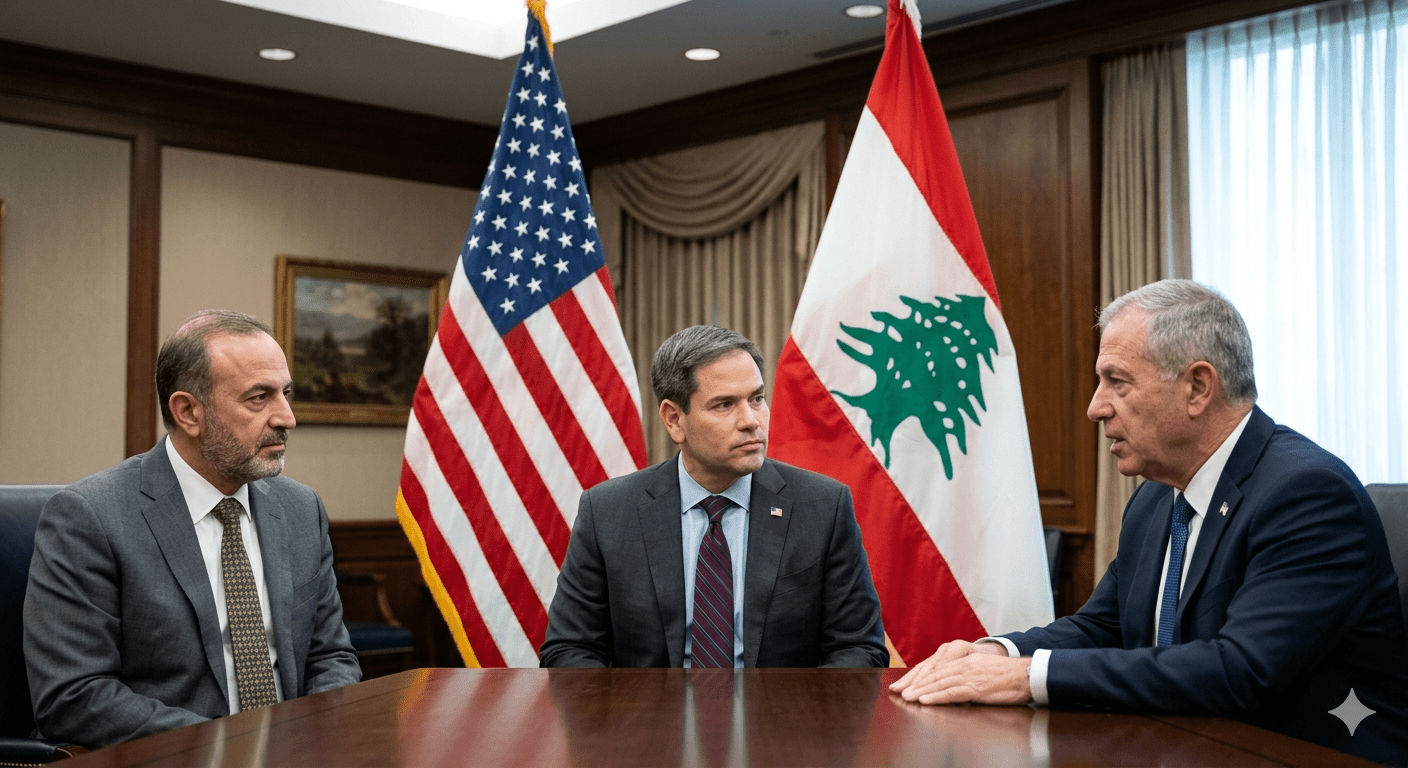
In a rare diplomatic development, Israel and Lebanon commenced their first direct talks in decades at the US State Department on Tuesday. US Secretary of State Marco Rubio hosted Israeli Ambassador Yechiel Leiter and Lebanese Ambassador Nada Hamadeh Moawad for what marks the highest-level direct engagement between the two neighbours since 1993.
The talks come as fierce fighting continues in southern Lebanon. Israeli forces have expanded their air and ground offensive, with more than 2,000 people killed and over a million displaced since early March. The conflict escalated after Hezbollah, the Iran-backed Lebanese militant group, launched rocket attacks on Israel following the death of Iranian Supreme Leader Ali Khamenei.
The two sides remain fundamentally divided. Israel has made it clear it will not agree to a ceasefire while Hezbollah continues its attacks. “We will not discuss a ceasefire with Hezbollah, which continues to carry out indiscriminate attacks against Israel and our civilians,” Israeli government spokeswoman Shosh Bedrosian told journalists. Instead, Israel is pushing for the complete disarmament of Hezbollah as a precondition for any broader peace agreement.
Lebanon, by contrast, is prioritising an immediate halt to the violence. Lebanese President Joseph Aoun warned that “stability will not return to the south if Israel continues to occupy its lands.” Culture Minister Ghassan Salame described the Washington meeting as a “preliminary meeting” aimed at producing “a pause in military activity if not a ceasefire,” adding that meaningful negotiations could only happen once hostilities subside.
The United States is walking a difficult line. The Trump administration is pressing both sides while simultaneously enforcing a naval blockade on Iranian ports in the Strait of Hormuz, fearing that the Israel-Hezbollah conflict could derail the fragile US-Iran ceasefire. A State Department official framed the talks as necessary, stating: “Israel is at war with Hezbollah, not Lebanon, so there is no reason the two neighbours should not be talking.”
Hezbollah has vehemently rejected the entire process. The group’s leader, Naim Qassem, urged the Lebanese government to cancel the Washington meeting, calling the negotiations “futile” and reiterating Hezbollah’s rejection of any direct engagement with the “usurping Israeli entity.” Senior Hezbollah figure Wafiq Safa said the group is “not concerned” with the negotiations and will not be bound by any outcomes.
Expectations for a breakthrough remain extremely low. A former Israeli defence official told journalists that it would take “a lot of imagination and optimism to think” the issues could be resolved in Washington, adding that “expectations are low.” According to a poll by the Israel Democracy Institute, 80 percent of Jewish Israelis believe their country should continue fighting in Lebanon against Hezbollah regardless of developments, even if it causes friction with the United States.
For now, the talks represent a symbolic first step. While no immediate agreement is expected, the mere fact that Israeli and Lebanese ambassadors are sitting at the same table for the first time in decades marks a notable diplomatic opening. Whether this rare window of dialogue can lead to genuine de-escalation remains highly uncertain, with both sides entrenched in opposing positions and Hezbollah waiting in the wings.